
 EN
EN
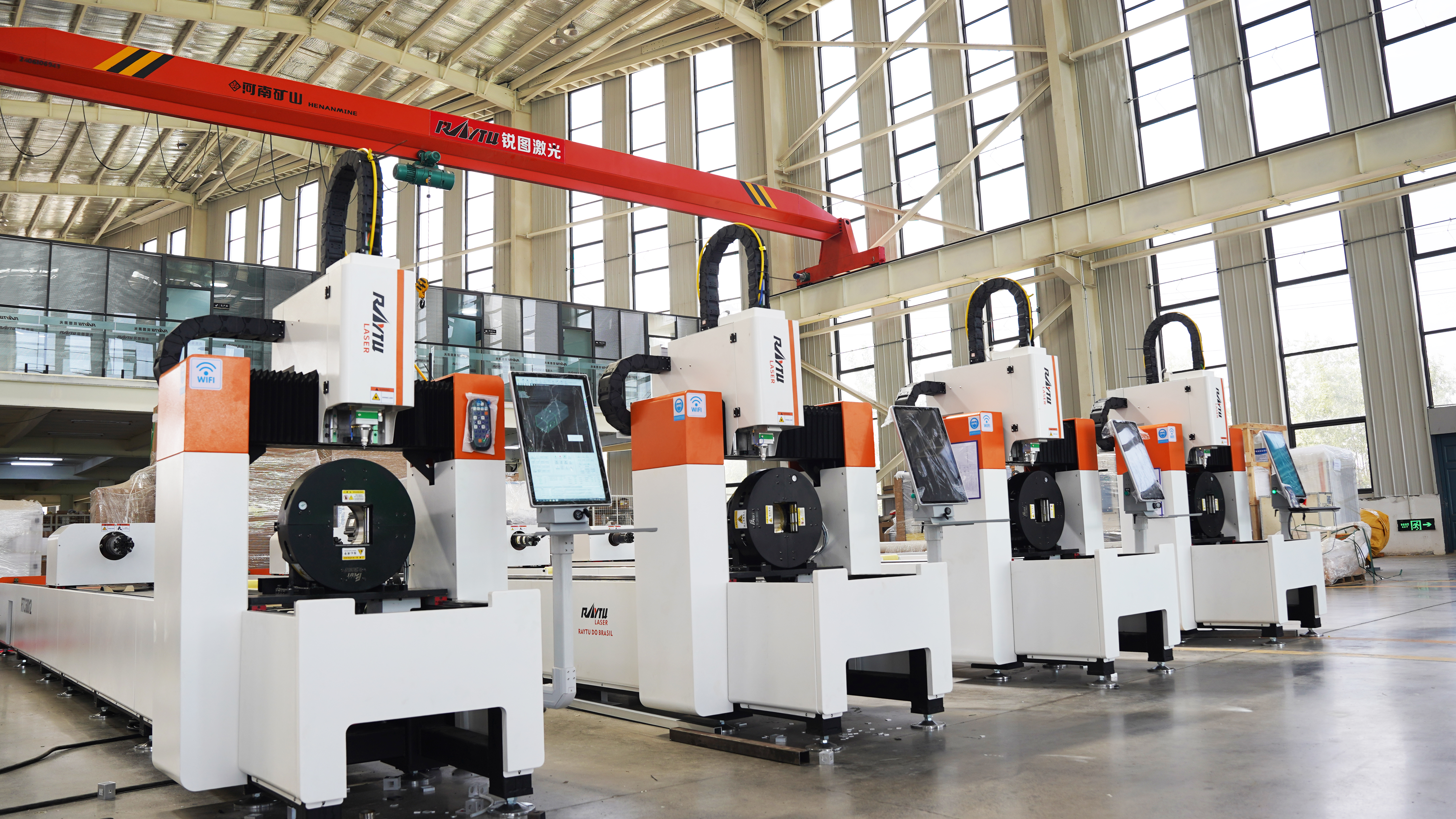
Why 5-Axis Pipe Laser Cutting Machines Are Essential for Complex Tube Geometries
Limitations of conventional and 3-axis systems with non-round, asymmetric, or structural tubes
Old fashioned pipe laser cutters and basic 3 axis systems run into serious geometry problems when dealing with odd shaped profiles. Standard rotating setups just can't keep the nozzle at the right distance from the tube or maintain good cutting angles on things like I beams and C channels. The issue gets worse with structural tubes that aren't evenly weighted. Regular clamps put uneven pressure as they spin around, which warps the material and creates size errors way beyond what's acceptable. All these issues lead to inconsistent cuts, unpredictable heat damage areas, and missing parts altogether. This forces shops to do extra work after the fact, something that eats up roughly a third of total production time according to shop floor experience.
How true 5-axis spatial control enables precise bevels, miters, weld preps, and compound angles
Real 5-axis pipe laser cutters get around these problems by combining rotation and tilt movements so the laser stays perfectly aligned even on complicated shapes. With this kind of control, operators can make continuous bevel cuts at angles up to 45 degrees while the pipe spins, creating edges ready for welding right away. The machines handle tricky compound angle miters where different cutting planes meet at odd angles. They also manage non-planar holes that need to follow spiral or irregular surfaces. For asymmetrical features, the system adjusts pitch, yaw, and roll dynamically as the tube rotates. The CNC system works all together across X/Y/Z linear movements plus two rotational axes (usually A/C or B/C), letting the cutting head move around complex parts while keeping focus spot accuracy down to just 0.1mm. This level of precision simply isn't possible with basic cutting equipment.
Real-world impact: Scrap reduction, repeatability, and first-pass success rates in precision fabrication
Manufacturers working on precision components have seen major improvements in their operations since switching to 5-axis pipe laser cutting tech. Industry studies show some impressive numbers: the first pass success rate jumped from around 76% to nearly 94%, which means far less rework needed. Material waste also went down significantly, about 19 tons less per year for each system installed. Setup times for complicated parts dropped dramatically too, going from taking almost an hour and a half down to just under eight minutes. These machines can hold positions within 0.05mm accuracy, so critical parts like hydraulic ports or structural joints stay consistent throughout entire production runs. The reduction in manual adjustments and extra steps usually cuts labor expenses by roughly 32%. What's interesting is how this technology opens doors for architects and engineers who used to think certain designs were simply too expensive to produce.
Tube Shape Compatibility: Matching Your Profile Portfolio to Pipe Laser Cutting Machine Capabilities
Performance Benchmarks: Round, Square, Rectangular, and Structural Tubes (I-Beams, C-Channels)
Today's laser cutting equipment for pipes can achieve around 0.1mm accuracy when working with round, square or rectangular tubes measuring up to 12 inches across. Wall thickness matters too, with most machines handling materials from about half a millimeter thick all the way up to 12mm. When dealing with structural components like I-beams or C-channels, good clamping becomes really important to stop any movement while cutting takes place. Many shops have started using three jaw chucks equipped with built-in pressure sensors these days, which helps keep everything in position even for those tricky cutouts. Shops that match their machine specs correctly to both the tube size and required laser power tend to see about 15% reduction in waste material. But things go south pretty quickly if there's a mismatch somewhere. Try running a laser under 4kW on something as thick as a 10mm C-channel? Expect rough edges and lots of rework down the line.
Handling Challenging Profiles: Oval, D-Shaped, Hexagonal, and Custom Extrusions
Working with irregular shapes needs close cooperation between hardware and software components. When dealing with oval or D-shaped tubing, manufacturers rely on vision guided rotary heads that constantly tweak their focus points to keep the laser beam on track across those tricky curves. For hexagonal sections and other custom profiles, smart roller supports come into play, actively fighting against rotation slip when making complicated bevel cuts. Handling asymmetric parts calls for adaptable clamping solutions too. Four jaw systems where each jaw operates independently are great at gripping odd shaped materials without causing any distortion. Companies that cut specialty extrusions report cutting down their setup times by around 40% thanks to CAD driven path corrections. This means they get better results right from the first attempt even when working with angles that don't fit standard specifications.
Critical Hardware Features That Enable Reliable Complex Tube Processing
Rotary head with tilting cutting function: Dynamic angle adjustment during rotation
Real 5 axis pipe laser cutters come equipped with special rotary heads that can tilt the cutting nozzle as it rotates around the workpiece. This helps keep the laser focused properly and maintains good gas pressure even when working on those tricky compound angles found in oval or D shaped tubes. Fixed angle systems just don't handle this kind of job well because they can't adjust on the fly. The ability to make these real time changes is actually what stops the laser beam from drifting off course. And this matters a lot for precision work where tolerances need to stay within about 0.1 mm on those sloped edges. Some research papers published by laser experts back this up too.
Adaptive gripping solutions for open or asymmetric sections—roller supports vs. intelligent clamps
When dealing with non-circular shapes, regular fixtures just won't cut it. Roller supports work great for spinning round tubes around continuously, but things get tricky with odd shapes like C-channels or those weird custom extrusions that manufacturers love so much. That's where smart clamps come into play these days. They adjust their grip strength depending on how thick the walls are. Think about those super thin stainless steel tubes under 2mm they can easily crush if not handled right, yet still hold onto those massive structural beams without slipping. A study from the Journal of Manufacturing Processes actually showed that these adaptive clamping systems save about 30% of setup time when compared to old fashioned manual methods. Makes sense really since nobody wants to waste hours adjusting bolts every time something changes on the production line.
Chuck design matters: 3-jaw vs. 4-jaw systems and independent jaw control for distortion-free holding
Getting proper multi-point clamping right helps prevent those annoying distortions during machining. For regular round tubes, three-jaw chucks usually work fine. But when dealing with tricky shapes like I-beams or oddball extrusions, we need those fancy four-jaw setups where each jaw can be adjusted separately. These distribute the twisting forces much better across those open sections of metal. According to what many shops have observed, switching to four-jaw systems cuts down on material warping by about 40% when working with structural tubing. Modern pipe laser cutters come equipped with self-centering chucks these days too. They adjust themselves automatically to account for slight differences in the size of raw materials, which saves time and reduces scrap.
Software Intelligence: CAD/CAM, Nesting, and Simulation for Intricate Tube Designs
Smart nesting and path optimization for holes, arcs, curves, and irregular cutouts
Advanced algorithms maximize material efficiency by intelligently arranging cut patterns along tube lengths—particularly valuable for D-shaped or hexagonal extrusions. Software dynamically calculates optimal toolpaths for irregular features, preserving precision while reducing cycle times. Recent case studies demonstrate such optimization cuts scrap by up to 30% in high-mix production environments.
Deep CAD/CAM integration and real-time simulation for accurate bevel and angled cut verification
When Computer Aided Design systems send their information straight to the cutting machines, it makes everything run smoother. Before any real work starts on those tubes, simulations show exactly how lasers will interact with the three dimensional shapes. These simulations catch problems early on, like when parts might hit each other during processing or when heat could warp the material. This is really important stuff for those complicated angled welds that need just the right preparation. As things get made, there's constant checking going on between what was planned in the computer and what actually happens in the real world. This back and forth keeps everything accurate down to fractions of a millimeter in the finished product.
Balancing Automation, Throughput, and Precision in High-Mix Complex Tube Production
Making complex tubes in mixed batches requires finding the right balance between automated processes, production speed, and exact measurements. Laser cutting machines for pipes do this well because they have smart paths that adjust themselves and monitor everything as it happens. These machines switch between different shapes quickly while still keeping accuracy down to the micron level. According to research, these systems cut waste by around 40% compared to older semi-automated methods, mainly because they handle tricky parts like asymmetrical shapes or thin walls without mistakes. When running large volumes, getting the most out of each run matters a lot. Smart software arranges materials efficiently and prevents collisions, so cutting heads work better and faster than ever before, often completing multi-angle cuts in under 90 seconds. The good news is that accuracy doesn't drop off at all thanks to systems that constantly check and adjust laser focus points and pressure settings on the holding fixtures. This means consistent weld preparation quality even when machines run non-stop day after day. Manufacturers benefit from being able to manage changing order sizes and complicated designs without losing quality on their first attempt. Industry reports suggest that top performing operations regularly hit over 98.5% success rates on their initial production runs.
FAQs
What are the limitations of conventional pipe laser cutters?
Conventional pipe laser cutters struggle with odd-shaped profiles and cannot maintain the nozzle distance or cutting angles on things like I beams and C channels. This can lead to warping and size errors, inconsistent cuts, and missing parts, requiring extra production time.
How do 5-axis pipe laser cutters improve precision?
5-axis cutters combine rotation and tilt movements to keep the laser aligned on complicated shapes. This allows for precise bevels, miters, weld preps, and compound angles with CNC-controlled movements across X/Y/Z and two rotational axes, achieving focus spot accuracy down to 0.1mm.
What shapes can modern pipe laser cutting machines work with?
Modern laser cutting machines can handle various shapes, including round, square, rectangular, structural tubes like I-beams and C-channels, and challenging profiles like oval, D-shaped, hexagonal, and custom extrusions.
How does software enhance laser cutting precision?
Intelligent software optimizes nesting and path for holes, arcs, curves, and cutouts, reducing cycle times and scrap by up to 30%. Deep CAD/CAM integration provides real-time simulation for accurate verification, keeping precision down to fractions of a millimeter.
Table of Contents
- Why 5-Axis Pipe Laser Cutting Machines Are Essential for Complex Tube Geometries
- Tube Shape Compatibility: Matching Your Profile Portfolio to Pipe Laser Cutting Machine Capabilities
- Critical Hardware Features That Enable Reliable Complex Tube Processing
- Software Intelligence: CAD/CAM, Nesting, and Simulation for Intricate Tube Designs
- Balancing Automation, Throughput, and Precision in High-Mix Complex Tube Production
- FAQs