
 EN
EN
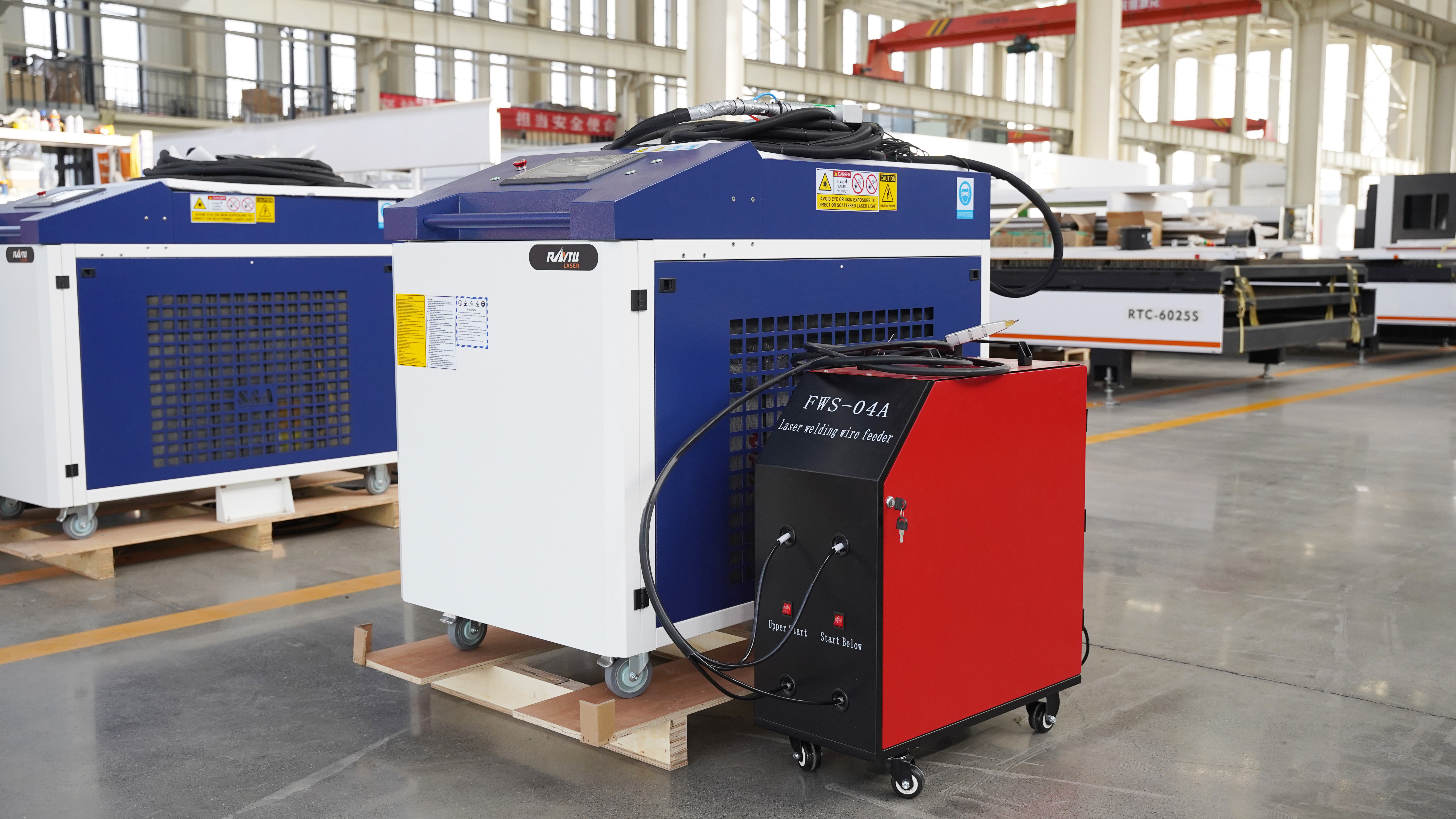
Real-Time Laser Output Monitoring and Data-Driven Stability Control
Why continuous power and beam profile monitoring prevents process drift in industrial laser welders
Keeping power stable within about plus or minus 1.5% and maintaining good beam focus is really important for avoiding problems like uneven penetration or porosity when running operations for long periods. When manufacturers monitor things like how intense the laser light is distributed across the work area, whether the wavelength stays consistent, and exactly where the spot lands (even catching tiny shifts down to 50 micrometers), their closed loop feedback systems can jump in and fix issues right away. This kind of protection helps keep welds solid during those lengthy production runs that often last several hours at a time. The problem comes from thermal buildup which tends to wear down laser diodes over time. If there's no proper monitoring system in place, the beam might start drifting out of alignment, causing the heat affected zone to grow by somewhere between 12 and 18 percent just after four hours of operation. That's why modern equipment now incorporates photodiode arrays along with fast acting sensors that catch these microscopic fluctuations before they actually ruin the quality of the weld.
Cloud-connected data logging for predictive instability detection and trend-based maintenance scheduling
Cloud-based systems take all that raw sensor information and turn it into something useful through machine learning techniques. When looking at past power changes, how well cooling systems perform over time, and what happens with beam alignment, these smart systems can actually predict when parts are going to start failing. Think about resonator optics or those pump diodes we rely on so much. A pattern where optical efficiency drops about 0.8 percent each week usually means it's time to replace those diodes. This lets technicians plan maintenance around regular shutdown periods instead of dealing with surprises. According to recent research in Automation Today from last year, facilities using remote diagnostics see about a third less unexpected downtime and waste roughly 27% fewer materials on bad welds. And when parameters start drifting out of spec, the system kicks off automatic calibration checks before things get too far off track.
Precision Thermal Management for Sustained Laser Welder Performance
Coolant stability thresholds: Flow rate, temperature deviation (±0.5°C), and chiller calibration for >8-hour operation
Keeping coolant temperatures stable within about half a degree Celsius during ongoing operations really matters if we want to avoid thermal issues and slow down component wear. When temps go beyond this range for shifts lasting eight hours or more, studies indicate diodes start degrading around 22% faster while welds become more porous. Getting the flow right matters too most systems work best between 8 to 12 liters per minute at roughly 60 pounds per square inch pressure. Regular maintenance checks every three months on chillers helps maintain proper heat balance throughout the system. Looking at real world factory data, companies that stick closely to these guidelines see about a third less unexpected shutdowns when running long production cycles.
Thermal lensing mitigation: How coolant fluctuations degrade focus accuracy and increase HAZ width by 12–18%
When coolant systems become unstable, they cause something called thermal lensing. Basically, changes in the refractive index of laser optics make the focal point wider instead of sharp. This means the laser beam isn't as focused anymore, so the energy gets spread out rather than concentrated properly. For work involving stainless steel materials, these issues can actually increase the heat affected zone (HAZ) width between 12% to almost 18%. That kind of expansion really weakens the strength of welded joints. Even small temperature fluctuations matter too. Just a 3 degree Celsius change in coolant temperature will start distorting the spot size after about twenty minutes of operation. Operators then have to keep adjusting power settings on the fly, which naturally introduces inconsistencies into the welding process. Keeping those thermal conditions stable throughout production is what maintains that crucial micron level focus needed for high quality precision welding jobs across industries.
Process Parameter Coordination to Stabilize Keyhole and Molten Pool Dynamics
The Power–Speed–Focus Triad: Defining Stable Operating Windows for Stainless Steel (304) at 2 kW CW
When working with stainless steel type 304 at a 2 kW continuous wave output, getting good welds really comes down to balancing three main factors: laser power levels, how fast the material moves under the beam, and where exactly the laser focuses on the workpiece. Even small changes can throw everything off balance, causing problems like tiny holes forming in the metal (porosity) or parts being cut away unintentionally (undercut). According to research published last year in the Welding Journal, keeping power variations below 1.5%, movement speeds within 3% accuracy, and focus points no more than 0.2 mm off target cuts down on welding defects by roughly 30 to 50 percent. Before starting actual production runs, experienced technicians always run tests first to confirm these settings work for their particular setup. The reason? Over time, things like heat affecting the lens and changes in how reflective the metal becomes actually shrink the range where everything works properly.
Pulsed Parameter Tuning: Frequency Modulation Strategies to Suppress Keyhole Collapse in High-Speed Seam Welding
High speed seam welding uses pulsed lasers to prevent keyhole collapse through frequency modulation techniques. The process alternates between periods of higher power that create deeper keyholes and lower power settings that help maintain stable molten pool flow. What makes this method effective? Well, it cuts down on spatter formation by around 40%, which is quite significant in industrial applications. When starting a weld seam, gradually increasing the pulse frequency from 50 Hz all the way up to 500 Hz helps manage heat buildup issues. This adjustment allows for consistent penetration depth even when welding continuously over distances exceeding 2 meters. And compared with traditional fixed frequency methods, these variable frequency approaches actually reduce HAZ widening by approximately 12 to 18 percentage points, making them much better suited for precision work where dimensional stability matters most.
Mechanical and Robotic Consistency: Fixturing, Vibration, and Path Repeatability
Clamping-induced stress vs. thermal distortion trade-offs in thin-sheet long-run laser welding
Getting the right fixturing means finding that sweet spot between enough clamping force to stop distortion but not so much that it damages the welds. When working with thin section stainless steel, too much pressure creates problems like residual stresses and microcracks as things cool down. On the flip side, if there's not enough fixturing, we see thermal distortion happen pretty badly too. We've measured displacements around 0.8 mm per meter when temperatures hit about 150 degrees Celsius because of how these materials expand and contract. That's why many shops now use those precision air operated clamps with feedback systems. They keep the pressure in that ideal range of 3 to 5 Newtons per square millimeter. These clamps spread out the force properly and actually adjust as materials grow thermally during processing. For long production runs lasting eight hours straight, controlled constraint areas really help prevent buckling issues. Most manufacturers aim to keep dimensional changes under plus or minus 0.15 mm along those continuous weld seams throughout the entire run.
Robotic path repeatability loss (<50 µm deviation) and its direct correlation with weld width variation (±0.2 mm after 6 hrs)
When robot arms run for long periods, they start to deflect slightly, which leads to path drift dropping under the important 50 micrometer mark after about six hours of operation. These small deviations change how the laser beam hits the material at angles ranging from 0.3 to 0.5 degrees, messing up the formation of the keyhole during welding. Measurements taken directly on the workpieces reveal something interesting: weld widths actually grow by around 12 percent when these deviations peak, but shrink back down by about 8 percent during low points. This fluctuation goes way beyond the acceptable plus or minus 0.2 millimeter range. Servo motor vibrations create additional problems too, particularly noticeable in gantry type systems where positioning gets even worse over time. To combat this issue, manufacturers now use real time laser tracking combined with special damping mounts that help keep path stability within roughly 15 micrometers per hour thanks to smart compensation algorithms working behind the scenes.
Standardized Warm-Up, Pre-Operation Validation, and Stable Operating Procedures
Laser resonator warm-up protocols: Why 20 minutes is the minimum for <1% power fluctuation in production-grade laser welders
Most industrial laser welders need about 20 minutes of warm up time before they reach stable operating conditions in their resonator cavities. When operators skip this important step, there tends to be around a 3-5% drop in power output within the first hour of operation. According to research published last year in the Laser Systems Journal, this actually raises the chance of porosity issues by roughly 30%. The warm up process helps stabilize both the optical components and the gain medium inside the system. This reduces those annoying hotspots that form when things aren't balanced properly, plus it keeps the wavelength from drifting too much. Both problems can really mess up weld quality, especially for jobs that take several hours to complete.
Pre-weld validation routines: “Dummy seam” testing, beam alignment checks, and shielding gas coverage verification
Getting things right before starting any welding operation helps keep the whole process stable, and there are basically three main checks that need doing first. Testing dummy seams on scrap material is how most shops figure out if their power and speed settings are going to work properly when they actually start producing parts. Checking beam alignment against those little crosshair targets keeps everything focused accurately within about plus or minus 25 microns, which makes all the difference in getting consistent weld widths across batches. At the same time, checking the shielding gas setup with both flow meters and some old fashioned smoke tests stops unwanted oxidation from ruining good welds. Shops that stick to this routine tend to see around 22% fewer problems with defective welds and about 15% less time spent fixing mistakes, as noted in the latest issue of Manufacturing Technology Review from last year. Taking care of these details upfront just makes sense because it cuts down on those frustrating surprises that can throw off entire production runs.
FAQ Section
Why is real-time monitoring important in industrial laser welders?
Real-time monitoring keeps laser operations stable by adjusting power and beam alignment to prevent issues like porosity or uneven penetration during long production runs.
What role does cloud-based data play in laser welding?
Cloud-based data uses machine learning to analyze sensor information, predict failures, and schedule maintenance, reducing unexpected downtime and improving welding quality.
Why is coolant stability vital in laser welding?
Stable coolant temperatures ensure thermal management, reducing component wear and avoiding expanded heat affected zones that weaken welds.
How do laser welding systems manage path repeatability?
Advanced systems use laser tracking and damping mounts to maintain path stability, minimizing deviations that affect weld integrity.
Table of Contents
- Real-Time Laser Output Monitoring and Data-Driven Stability Control
- Precision Thermal Management for Sustained Laser Welder Performance
- Process Parameter Coordination to Stabilize Keyhole and Molten Pool Dynamics
- Mechanical and Robotic Consistency: Fixturing, Vibration, and Path Repeatability
- Standardized Warm-Up, Pre-Operation Validation, and Stable Operating Procedures
- FAQ Section