
 EN
EN
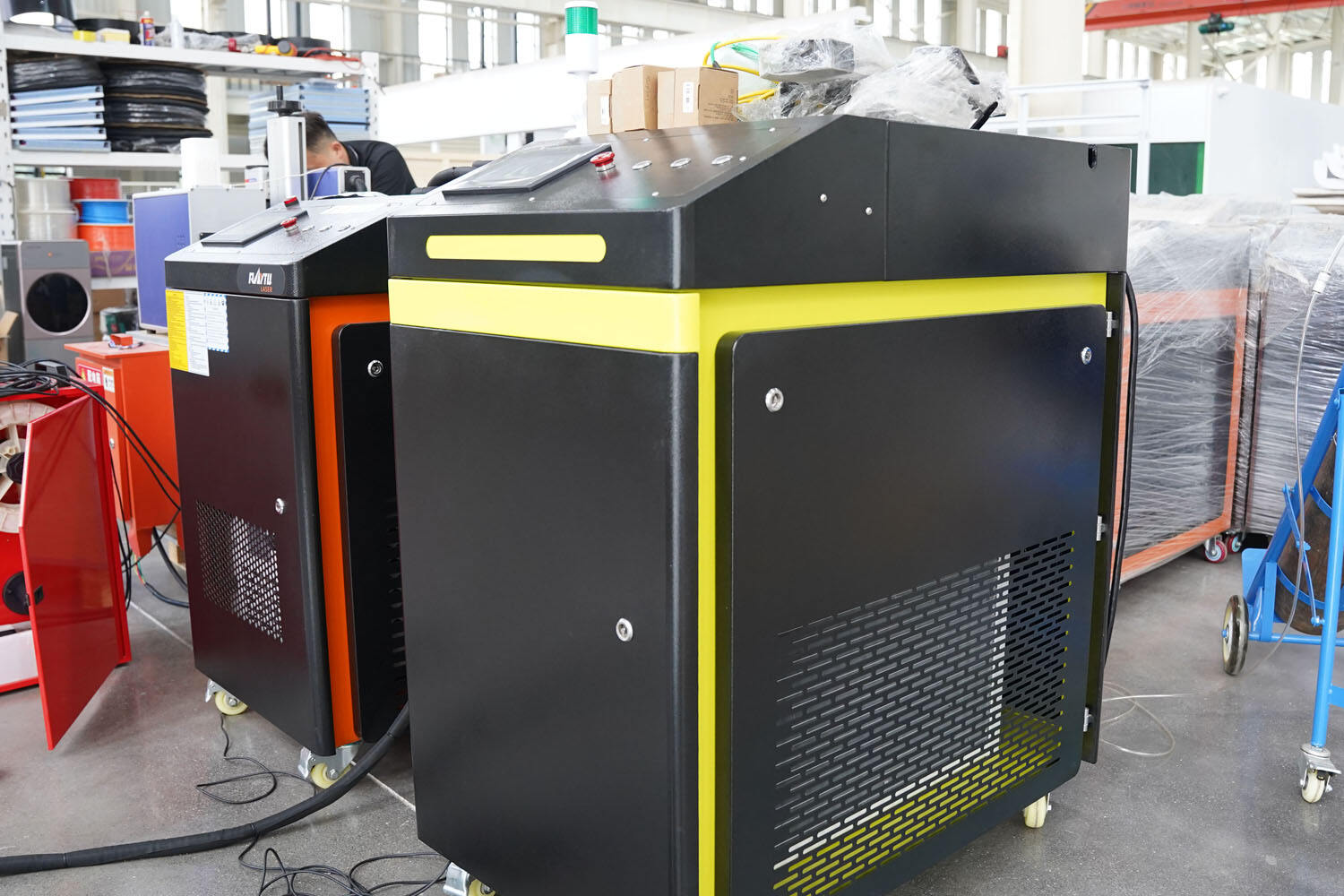
How Laser Cleaning Machines Remove Common Metal Contaminants
Photothermal and photomechanical ablation: Why laser cleaning machines selectively vaporize contaminants without damaging metal substrates
Laser cleaning works because different materials absorb light differently. When the machine fires its intense beams, it turns that light into heat right at the surface where dirt and grime sit. Take rust as an example it grabs about 95% more of that laser energy compared to regular steel, so it heats up enough to basically disappear while the metal underneath stays cool. This means no messy chemicals left behind and no warping of the material either. There's another trick too called the photomechanical effect. Basically, when things heat up super fast they expand really quickly, creating tiny shockwaves that knock away even the thinnest layers of oil down to around 5 micrometers thick. Since lasers don't actually touch what they're cleaning, they can remove almost all contaminants (we're talking 99.9%) without messing with how the metal behaves. Tests show this meets industry standards for surface quality according to ISO 8501-1. Studies also confirm that the amount of energy needed is just enough to get the job done without harming the underlying material.
Key parameter tuning: Pulse duration, fluence, and wavelength selection for optimal contaminant removal with a laser cleaning machine
Precise calibration of three core parameters ensures effective, substrate-safe cleaning:
- Pulse duration: Nanosecond to femtosecond pulses limit heat diffusion. For thin copper sheets, pulses <10 ns reduce thermal stress by 40%.
- Fluence: Must exceed contaminant vaporization thresholds but remain below metal damage limitsâe.g., removing epoxy (1.5 J/cm² threshold) from aluminum (damage onset at 2.8 J/cm²) demands ±20% accuracy.
- Wavelength: Near-infrared (1064 nm) penetrates iron oxides on ferrous metals; UV (355 nm) targets organic residues on sensitive alloys.
| Parameter | Rust Removal | Paint Stripping | Oil Degradation |
|---|---|---|---|
| Optimal Pulse | 20â100 ns | 10â50 ns | 1â10 ns |
| Fluence Range | 3â5 J/cm² | 2â4 J/cm² | 1â2 J/cm² |
Optimized settings cut operational costs by $740k annually through reduced rework, per Ponemon Institute 2023 findings.
Rust, Oxides, and Mill Scale: High-Efficiency Removal from Ferrous Metals
Removing iron oxides (FeâOâ/FeâOâ) and mill scale from carbon steel using industrial laser cleaning machines
Laser cleaning technology gets rid of rust and mill scale through a process where the contaminants soak up laser energy and basically disappear into vapor. The reason this works so well is because carbon steel naturally reflects more light, which means it stays protected during treatment. This method keeps the underlying metal intact without causing those annoying pits that often happen with other techniques. Take abrasive blasting for instance it actually pushes particles into the surface, making coatings fail much faster than they should. When dealing specifically with mill scale that thick, crystal-like stuff left from hot rolling processes high power laser pulses literally break apart its structure. What's impressive is how fast this all happens around one square meter per hour even when facing serious oxidation problems. Plus there are absolutely no chemicals involved or leftover mess to clean up afterward.
Pre-weld surface preparation: How laser cleaning machines eliminate oxide layers to reduce porosity by >99.7% (AWS D1.1 validated)
When it comes to getting surfaces ready for welding, laser cleaning really shines because it removes those pesky microscopic oxides that trap gases during the fusion process. According to tests done under AWS D1.1 standards, this method cuts down on weld porosity by an impressive 99.7%. The technology works best when targeting iron oxide absorption at around 1064 nanometers, achieving what's called Sa 2.5 surface cleanliness without creating any heat affected zones. For complicated shapes and parts, automated laser systems can work their magic at speeds between half a meter to two meters per minute. This approach saves about 70% of the time normally spent on grinding before welding, all while keeping the metal's structural properties intact. That makes it particularly valuable in industries like aerospace where component integrity is absolutely critical for pressure vessels and other safety-critical applications.
Organic Contaminants: Oil, Grease, and Industrial Coatings
Non-contact removal of hydrocarbons, cutting fluids, and lubricants with laser cleaning machines â no solvents or residue
Laser cleaning works by vaporizing organic stuff like oils, greases, and cutting fluids through what's called photothermal ablation. The process uses carefully adjusted laser pulses that specifically target those hydrocarbon bonds while keeping the metal underneath cool. This method can take off films as thin as 0.1 microns in thickness, doing so thoroughly without any leftover solvents or creating new contaminants. Compared to old school methods like chemical baths or scrubbing with tools, laser cleaning actually hits the Sa 2.5 standard from ISO 8501-1 which is important for industries where reliability matters most, think semiconductors for example. Plus it ticks all the boxes for EPA regulations since there's no need to deal with dangerous waste products at all.
Stripping paints, epoxies, and zinc-rich primers without heat-affected zones or substrate degradation
When using infrared lasers for coating removal, they work by peeling away layers one at a time. The organic polymer parts soak up the laser energy, whereas the metal underneath just bounces most of it back. Short pulses lasting less than 10 nanoseconds stop heat from spreading too much, which makes it possible to take off those zinc rich primers from galvanized steel surfaces without messing up their protective qualities. After treatment, the base metal stays right where it should according to ASTM E8 standards, so there's no risk of tiny cracks forming like happens with sandblasting or other rough methods. For ship hulls specifically, this technique can clear coatings across about 10 square meters every hour with over 97 percent effectiveness. Best part? No need for any consumable materials during the process and absolutely nothing gets left behind in the form of embedded particles either.
Alloy-Specific Challenges: Aluminum, Stainless Steel, and Copper
Overcoming high reflectivity and thin native oxides on aluminum and copper with pulsed fiber laser cleaning machines
Working with aluminum and copper can be quite challenging because of their naturally high reflectivity levels, sometimes reaching around 95% at standard laser wavelengths, plus they form very thin oxide layers on their surfaces. The solution comes from pulsed fiber lasers which tackle this problem through brief bursts of intense energy. These short pulses effectively remove contaminants right before the heat has time to spread into the material itself. For copper specifically, these laser systems work best when set to about 1064 nanometers wavelength, and when the pulses last less than 100 nanoseconds. What makes them so effective is that they manage to clean surfaces with over 99% success rate while keeping the material intact. There's no noticeable warping or creation of heat affected zones, which means the dimensions stay stable and the mechanical properties remain unaffected after treatment.
Stainless steel passivation layer management: Balancing oxide removal and corrosion resistance preservation
Cleaning stainless steel requires careful handling because we need to get rid of dirt and grime without messing up the chromium layer that protects against rust. Industrial lasers do a pretty good job here thanks to their controlled energy output around 0.8 to 1.2 joules per square centimeter. These machines can zap away things like oxidation, greasy residues, and those unsightly heat tint marks without damaging the protective coating underneath. Some research indicates these well-tuned laser systems cut down on iron particles on surfaces by almost 90%, keeping over 98% of the chromium intact. That kind of performance meets industry standards for cleanliness set by ASTM A380 and stops those annoying little pits from forming on metal surfaces.
Frequently Asked Questions
How does laser cleaning work?
Laser cleaning works by converting the intense laser beams into heat that vaporizes contaminants without affecting the metal substrate.
What types of contaminants can laser cleaning remove?
Laser cleaning can effectively remove rust, mill scale, grease, oil, paints, epoxies, and other organic residues.
Is laser cleaning safe for metal substrates?
Yes, laser cleaning is safe for metal substrates as it uses precision techniques to avoid damaging them.
What are the benefits of using laser cleaning machines?
Laser cleaning machines offer benefits such as non-contact cleaning, reduced operational costs, and compliance with environmental regulations.