
 EN
EN
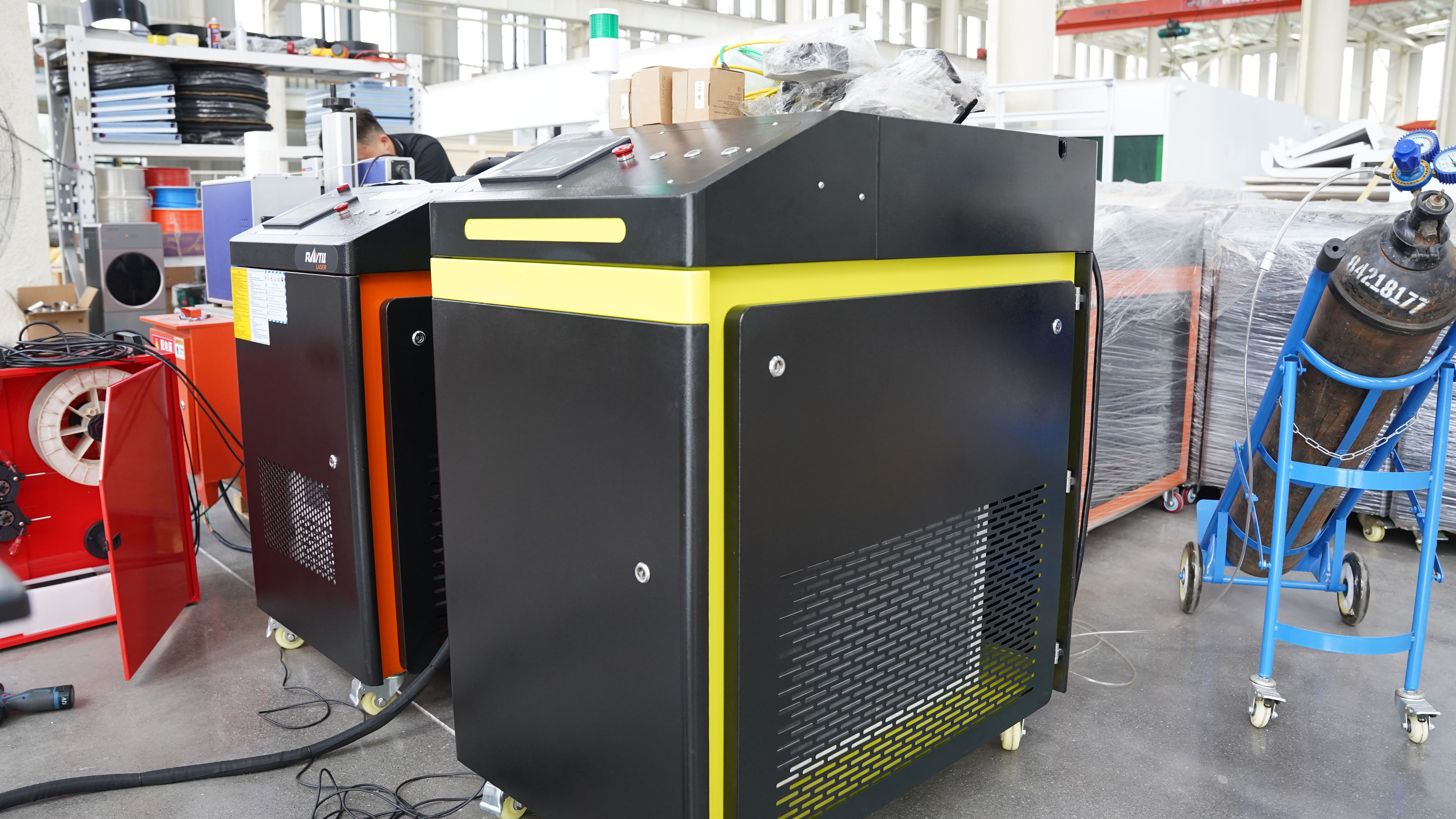
How Laser Welder Achieves High Precision in Metal Welding
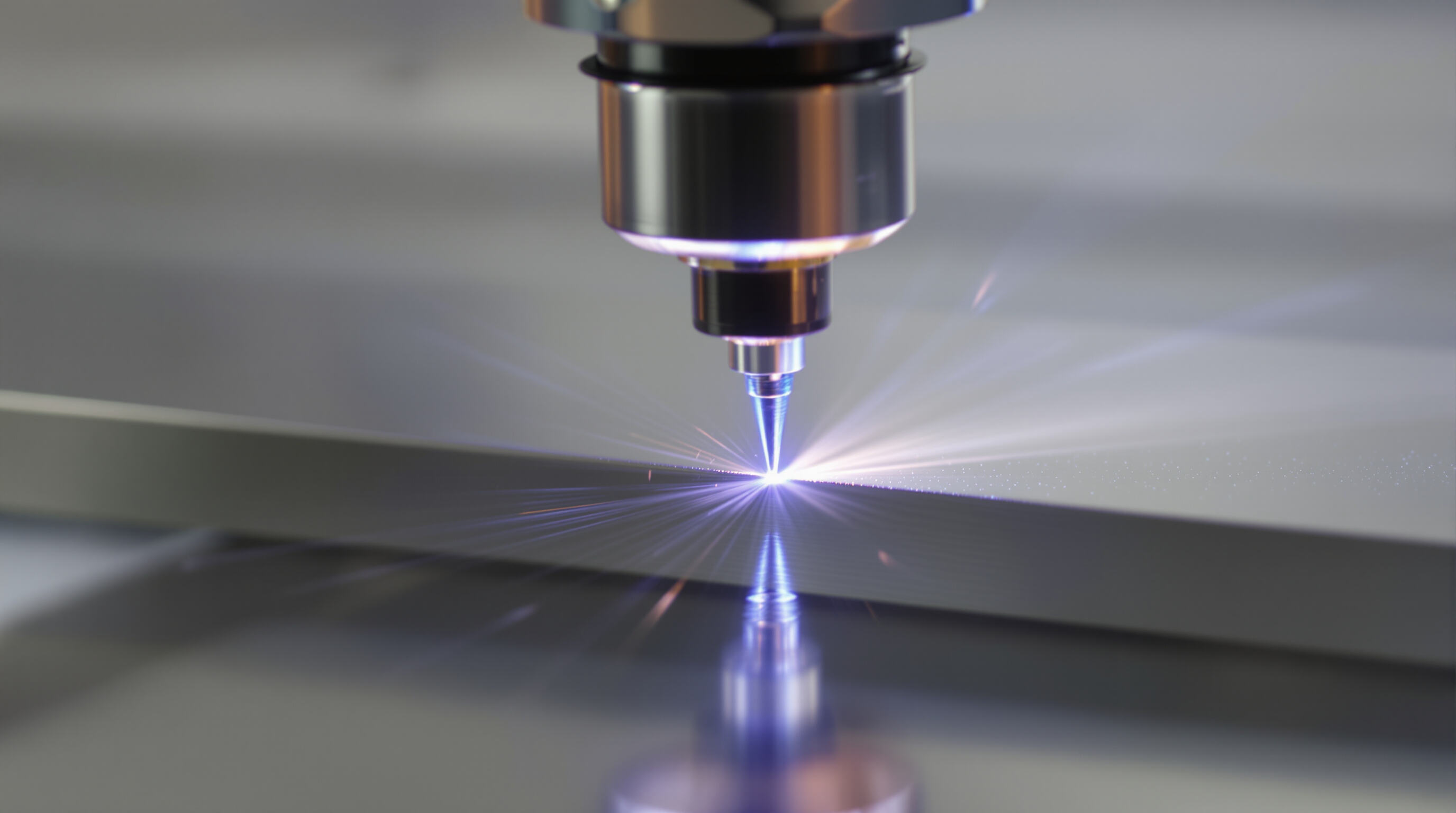
Working Principle of Laser Welder: Achieving Micron-Level Accuracy
Laser welders produce an intense light beam capable of reaching energy levels above one million watts per square centimeter. They can melt metal at spots as tiny as just over a tenth of a millimeter. The resulting welds have incredibly tight tolerances below 50 microns, which matters a lot when making things like tiny parts on circuit boards or those super thin medical needles. Since lasers don't actually touch what they're welding, there's no wear on tools involved. This means manufacturers get consistently accurate results even after thousands upon thousands of welds. Industry tests from last year showed this holds true across more than ten thousand cycles without losing quality.
Key Factors Influencing Precision: Beam Focus, Pulse Duration, and Wavelength
Three parameters govern laser welding precision:
| Parameter | Impact on Precision | Typical Adjustment Range |
|---|---|---|
| Beam Focus | Determines energy density (µm spot) | 0.05–0.3 mm focal diameter |
| Pulse Duration | Controls heat diffusion (0.1–20 ms) | <4 ms for thin metals |
| Wavelength | Material absorption efficiency | 1,030–1,080 nm for steel |
For example, a 1,070 nm wavelength improves stainless steel absorption by 38% compared to 980 nm systems (Laser Tech Quarterly 2024).
Comparison with Traditional Methods: Laser vs. TIG/MIG in Thin-Walled Stainless Steel
Welding 0.5 mm thick stainless steel sheets presents unique challenges, but laser systems offer significant advantages over traditional methods. These advanced systems cut down on heat affected areas by around 72% compared to TIG welding techniques, while still keeping the material's tensile strength well above 650 MPa. The real benefit becomes apparent when looking at thin metal components. Standard welding approaches tend to warp delicate structures, something that happens all too frequently in production environments. Laser technology changes this equation completely, achieving less than 0.25 mm distortion rate in approximately 95% of those critical aerospace fuel nozzle applications where precision matters most. Another major plus point comes from automation capabilities. When integrated properly, these systems slash positional errors down to below plus or minus 0.05 mm range, which puts them light years ahead of what manual MIG operators can realistically achieve even with extensive training.
Advantages of Laser Welder in Precision-Critical Manufacturing
Minimal Heat-Affected Zone Preserves Material Integrity
The focused beam (0.1–0.3 mm diameter) minimizes heat dispersion, reducing the HAZ to less than 10% compared to arc welding. This prevents warping in thin-walled stainless steel and preserves tensile strength by up to 92% in tool-grade alloys (Advanced Welding Technology Report 2023).
Non-Contact Process Enables Welding of Complex and Delicate Geometries
Eliminating mechanical stress allows micron-level accuracy in biomedical devices and aerospace fuel lines. Robotic arms paired with fiber lasers achieve 0.05 mm repeatability, essential for optical sensors and microfluidic channels.
High Repeatability and Integration with Robotic Automation
Automated laser systems deliver 99.8% process consistency through closed-loop feedback controls, reducing defect rates to <0.2% in high-volume production. Integrated vision systems adjust parameters in real time, maintaining ISO 9017 compliance even at speeds exceeding 25 mm/s.
Critical Applications in Aerospace and Medical Device Manufacturing
Aerospace: Zero-Defect Welding for High-Performance Components
In aerospace manufacturing, laser welders play a critical role because no defects can be tolerated when it comes to turbine blades or components in fuel systems. These machines work with incredibly fine beams measuring just 20 microns across, resulting in around 99.97% joint integrity when working with those tough nickel-based superalloys that jet engines rely on during intense heat conditions. Compared to traditional TIG welding methods that often cause warping issues, laser welding keeps things much more precise. The positioning stays accurate within about plus or minus 5 micrometers, which is exactly what the industry requires to meet those strict AS9100 quality standards.
Medical: Hermetic Sealing and Micro-Welding of Titanium Implants
Laser welders have become essential tools in medical device manufacturing, particularly for creating watertight seals on pacemaker casings and performing delicate micro-welds on titanium spinal implants where seam widths need to stay below 50 micrometers. The controlled application of heat during this process helps maintain the biocompatible properties of Grade 5 titanium, something that often gets compromised when using traditional arc welding methods which tend to create unwanted oxidation layers. Recent improvements in fiber laser tech are making it possible to work with incredibly thin materials too. We're seeing successful welding of coronary stent frameworks as thin as 0.1 mm with remarkable consistency down to about 8 microns. These advancements meet all the necessary FDA requirements for medical implants, but they also open up new possibilities for even more intricate designs in the future.
Compliance with Industry Standards: ISO 13485 and AS9100
Laser welding systems get certified according to standards like ISO 13485 for medical devices and AS9100 in aerospace industries after thorough checks on all parameters. The automated monitoring tracks things like pulse frequency between 50 and 5000 Hz plus shielding gas flow rates from 15 to 25 liters per minute. These systems create detailed reports ready for audits, showing less than 0.1% variation between production runs. Manufacturers who have implemented these systems report about 60% less time spent on inspections after welding, according to data collected from ISO certified facilities back in 2023. This kind of consistency makes quality control much smoother in high precision manufacturing environments.
Emerging Use in Minimally Invasive Surgical Tools
The technology is advancing robotic surgical instrument manufacturing, where laser welders join 316L stainless steel articulation joints measuring 0.3 mm in diameter. A 2024 study in Advanced Manufacturing Processes found that laser-welded arthroscopic tools exhibit 40% greater fatigue resistance than soldered equivalents, enabling slimmer designs without compromising sterility.
Optimizing Laser Parameters for Maximum Weld Quality and Consistency
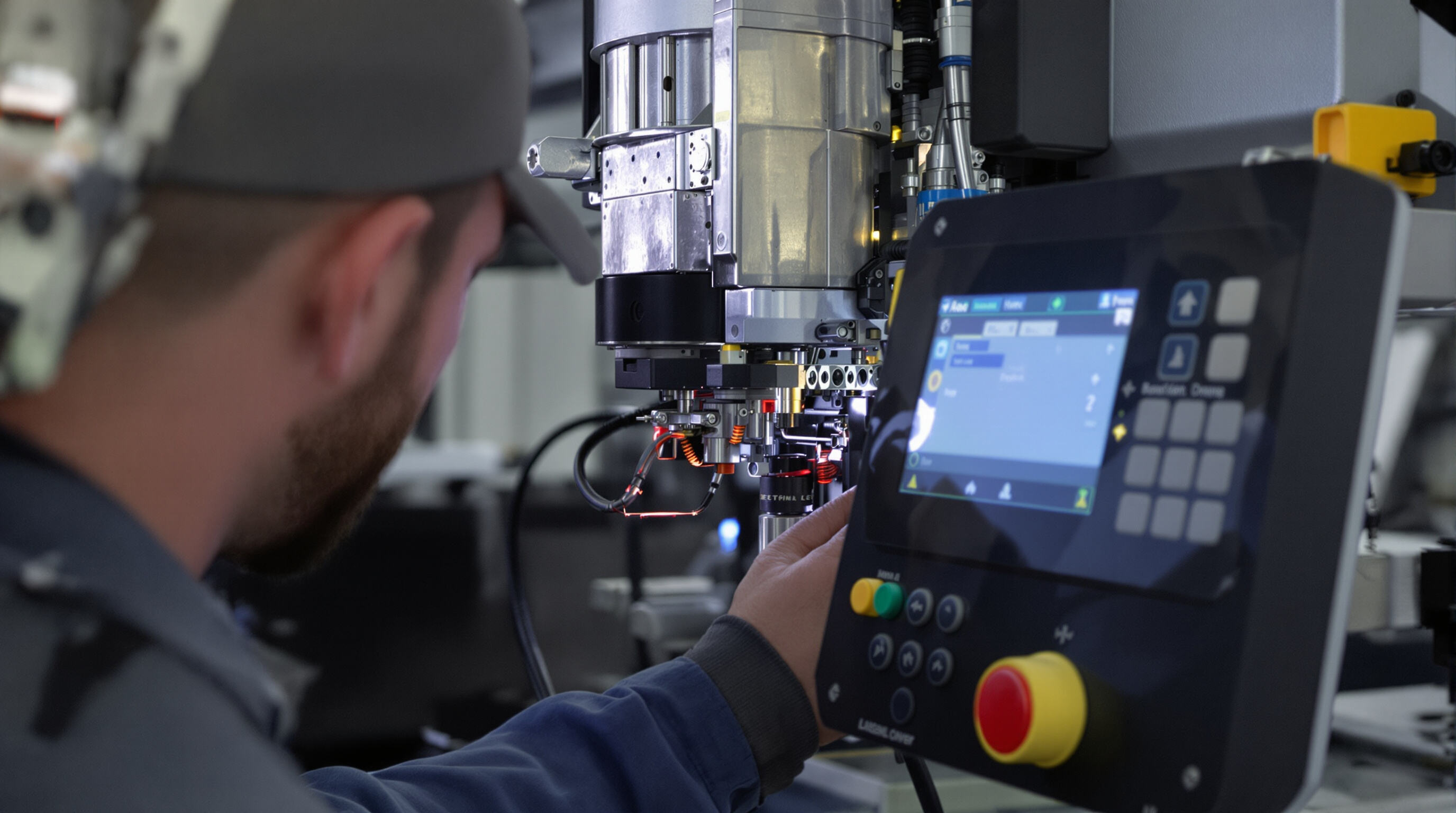
Laser Power, Travel Speed, and Focus Position: Impact on Penetration and Stability
Getting good results from laser welding really comes down to balancing three main factors: power levels between 800 and 6,000 watts, travel speeds ranging from 2 to 20 meters per minute, and how precisely the beam is focused within about plus or minus 0.1 millimeters. Recent research published in 2024 showed something interesting when they tested different settings on 1.5 mm thick stainless steel sheets. When welders narrowed down the focal spot size to just 0.2 mm, they saw a significant boost in penetration depth of around 34%. But there's a catch too. If operators crank up the power beyond 4 kilowatts while moving slower than 5 meters per minute, this tends to mess up the keyhole formation during welding. What happens next? The metal starts forming vapor pockets that eventually turn into annoying little pores in the final product. That's why many shops now rely on auto-focus systems for their lasers. These advanced optics keep everything aligned at the micron level even when heat causes lenses to warp slightly over time.
Controlling Porosity and Defect Formation Through Parameter Tuning
The length of pulse (ranging between 0.5 to 20 milliseconds) along with how much shielding gas flows (typically 15 to 25 liters per minute of argon) plays a big role in determining defect rates during welding processes. When we look at shorter pulses, those under 2 milliseconds specifically, they cut down on heat input by around two thirds when compared to continuous wave operation. This makes a noticeable difference for nickel alloys where it helps prevent excessive grain growth. Aluminum welds benefit too from adjusting the wobble amplitude in a circular pattern plus or minus half a millimeter. This technique brings down pore density dramatically from about 12 pores per square centimeter down to less than 2 per square cm. And now there's something pretty impressive happening with real time monitoring systems. These setups combine coaxial CCD cameras with machine learning algorithms to spot defects as they happen, achieving nearly flawless detection rates close to 99 percent accuracy in practice.
Balancing Welding Speed and Quality: Trade-Offs and Best Practices
High-speed welding (>15 m/min) requires careful optimization:
- Power-Speed Ratio: 0.4 kJ/mm for full penetration in automotive body panels
- Beam Oscillation: 300 Hz circular pattern reduces spatter by 89% at 18 m/min
- Pre/Post-flow Gas: 0.5 sec ramp prevents oxidation during acceleration
Prototype testing shows that parameter-locking workflows (minimum 5-iteration DOE) improve first-pass yield from 76% to 94% in medical device production.
Monitoring and Mitigating Defects in Laser Welder Operations
Common Defects in High-Precision Welds: Keyholing, Lack of Fusion, and Balling
Advanced welding systems still run into problems such as keyholing issues, poor fusion between materials, and balling effects that happen around 15 to 22 percent of the time during precision work according to research by Katayama and colleagues back in 2013. Most of these troubles come down to parameter mismatches. When the laser beam gets off focus even slightly, say about 0.1 millimeter difference, it can make the heat affected zone grow by almost half its size. And if pulses last too long, they tend to create holes filled with gas bubbles inside the metal. Take aluminum alloys for example, nearly 37 out of every 100 cases where there's porosity in welds actually trace back to those unstable keyhole formations during processing.
Understanding Keyhole Stability and Melt Pool Dynamics
Getting good results depends on keeping that keyhole stable during welding. The keyhole is basically a vapor channel formed when the laser hits full power. When there are changes in power levels above 200 watts or movement speeds varying around plus or minus 5 millimeters per second, things start going wrong in the melt pool. This causes problems with how the metal cools down and leaves behind those annoying residual stresses. Studies have found something interesting about titanium welds too. About 8 out of 10 defects seem to happen because of these plasma plume vibrations, which special acoustic sensors can actually pick up on, according to work published by Luo and colleagues back in 2019. Modern control systems today can tweak settings in just 10 milliseconds to fix these issues before they become real problems on the production line.
Real-Time Process Monitoring Using Optical Sensors and AI-Based Feedback
Today's advanced laser welding equipment comes equipped with co axial cameras alongside pyrometers and those fancy spectral analyzers that can capture footage at an impressive 5000 frames per second. The artificial intelligence behind these systems has been trained using thousands upon thousands of weld images, allowing it to spot tiny cracks measuring less than 50 microns with nearly 99% accuracy. This improvement alone has slashed scrap rates by around two thirds according to research published by Cai and colleagues back in 2024. When we're talking about life saving medical devices such as heart pacemakers, manufacturers rely on sophisticated closed loop control systems that blend together data from multiple sensors while working hand in hand with digital twin technology. These combined approaches result in practically flawless production runs with defects dropping below 0.2% in properly controlled manufacturing settings.
FAQ
What are the main advantages of using laser welders over traditional welding methods?
Laser welders offer minimal heat-affected zones, higher precision, reduced welding distortion, and compatibility with automated processes, making them preferable for industries requiring high precision such as aerospace and medical device manufacturing.
How does laser welding achieve such high precision?
Laser welding achieves high precision through controlled parameters such as beam focus, pulse duration, and wavelength, along with feedback systems that adjust settings in real-time to maintain accuracy.
What industries benefit most from laser welding technology?
Industries including aerospace, medical devices, automotive, and precision tooling benefit most from laser welding technology due to its high accuracy and minimal impact on material integrity.
How is defect formation controlled in laser welding processes?
Defect formation is controlled through real-time monitoring systems that use optical sensors and AI-based feedback to detect and correct defects as they occur.
What role do AI and sensors play in modern laser welding?
AI and sensors play a crucial role by providing real-time monitoring and feedback that help maintain welding precision and reduce scrap rates significantly.
Table of Contents
- How Laser Welder Achieves High Precision in Metal Welding
- Advantages of Laser Welder in Precision-Critical Manufacturing
- Critical Applications in Aerospace and Medical Device Manufacturing
- Aerospace: Zero-Defect Welding for High-Performance Components
- Medical: Hermetic Sealing and Micro-Welding of Titanium Implants
- Compliance with Industry Standards: ISO 13485 and AS9100
- Emerging Use in Minimally Invasive Surgical Tools
- Optimizing Laser Parameters for Maximum Weld Quality and Consistency
- Monitoring and Mitigating Defects in Laser Welder Operations
-
FAQ
- What are the main advantages of using laser welders over traditional welding methods?
- How does laser welding achieve such high precision?
- What industries benefit most from laser welding technology?
- How is defect formation controlled in laser welding processes?
- What role do AI and sensors play in modern laser welding?