
 EN
EN
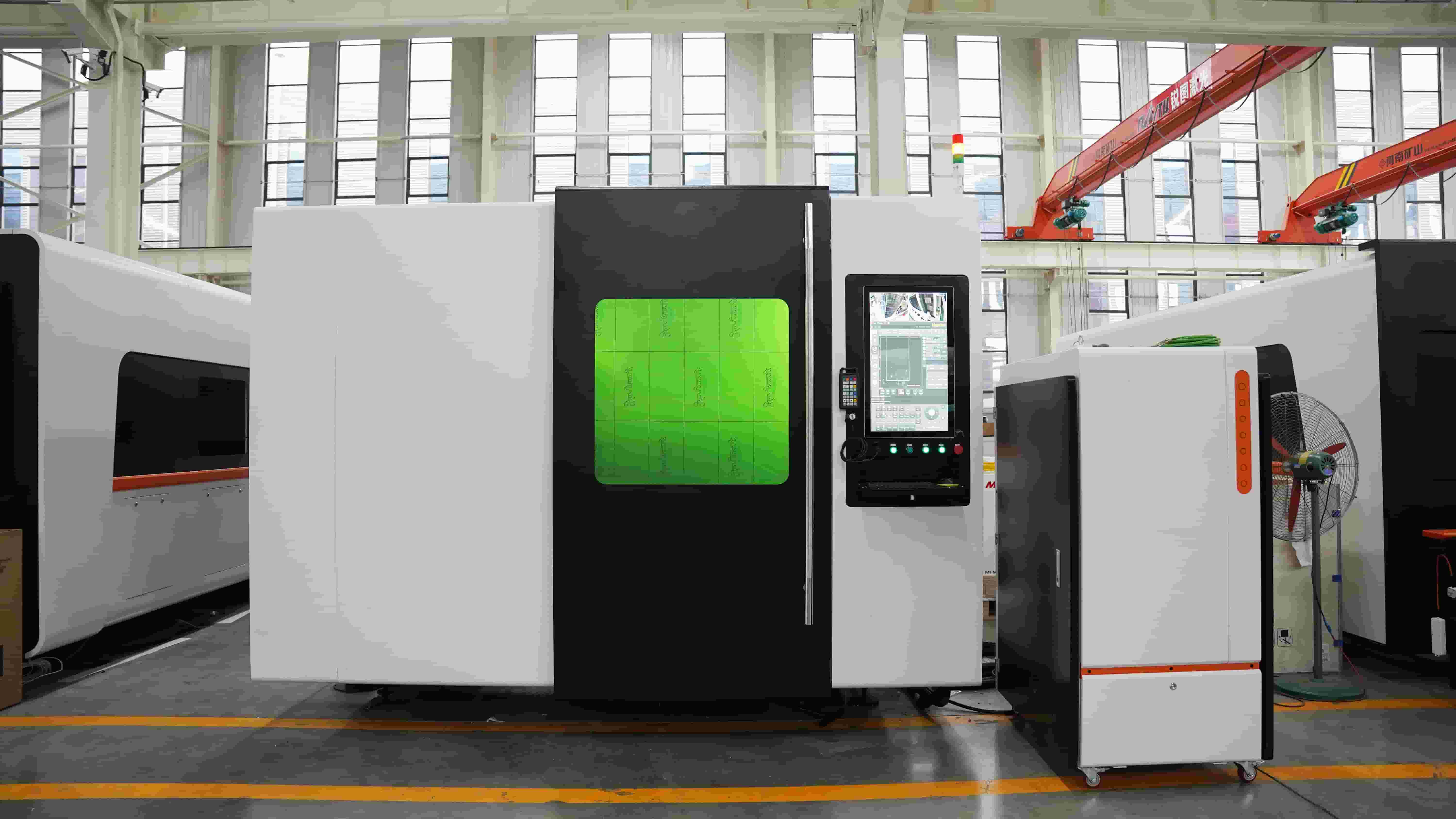
Understanding Metal Laser Cutting Machine Thickness Capabilities
Laser Cutting Machine Thickness Capabilities for Metals: An Overview
Most modern metal laser cutting machines work with materials ranging between about half a millimeter and 40 mm thick, though results depend on what kind of metal we're talking about and how powerful the laser actually is. The basic 3 kW models out there can manage around 12 mm of mild steel, but when we get into the industrial grade stuff with 12 kW plus power, those systems start handling 35 mm carbon steel although they need to slow things down quite a bit. Because of this wide capability range, laser cutting becomes practical for everything from thin automotive body panels that are just 1 to 3 mm thick all the way up to those big chunky parts found in heavy machinery which usually measure somewhere between 15 and 25 mm in thickness.
Typical Maximum and Minimum Thickness Ranges for Common Metals
| Material | Practical Cutting Range | Optimal Thickness | Precision Tolerance (±) |
|---|---|---|---|
| Carbon Steel | 0.8–30 mm | 1–20 mm | 0.05–0.15 mm |
| Stainless Steel | 0.5–25 mm | 1–15 mm | 0.07–0.18 mm |
| Aluminum | 0.5–20 mm | 1–12 mm | 0.10–0.25 mm |
| Copper | 0.3–10 mm | 0.5–5 mm | 0.15–0.30 mm |
Data reflects industry benchmarks for fiber laser systems (2–8kW)
How Material Properties Affect Laser Cutting Performance
The way a metal conducts heat and how hot it melts really affects how efficiently it can be cut. Take stainless steel for example it has all that chromium which means cutting it needs about 15 percent extra energy compared to regular carbon steel when they're the same thickness. And then there's aluminum, which reflects so much heat that machines need to run at higher power levels just to get through it properly. The latest fabrication industry data from 2024 shows something interesting too. For copper alloys thicker than 8 millimeters, fabricators often have to switch to special gas combinations such as nitrogen mixed with argon to handle the way heat spreads during cutting operations.
How Laser Power Determines Maximum Metal Thickness
Laser Power and Material Thickness Relationship Explained
The power of a laser, measured in kilowatts (kW), basically determines how thick metal it can cut through by focusing heat into the material. When working with really tough stuff, higher powered lasers just perform better overall, keeping up both speed and quality that matters so much in production environments. Take a look at the numbers: a 6kW machine actually produces about 2.5 times the peak power density compared to its 3kW counterpart. What does this mean practically? Well, such a powerful setup can handle 25mm carbon steel cuts without breaking a sweat while the weaker systems struggle beyond 12mm thickness. Many shops have made the switch to these higher capacity units simply because they get the job done faster and with fewer headaches when dealing with demanding industrial applications.
Maximum Metal Thickness by Laser Power (3kW, 6kW, 8kW)
| Laser Power | Carbon Steel | Stainless Steel | Aluminum |
|---|---|---|---|
| 3kW | ≈12mm | ≈8mm | ≈6mm |
| 6kW | ≈25mm | ≈15mm | ≈12mm |
| 8kW | ≈40mm | ≈25mm | ≈20mm |
Higher wattages reduce kerf width by 18–22% in thick-section cuts, minimizing material waste.
Cutting Performance on Carbon Steel, Stainless Steel, Aluminum, and Copper
- Carbon steel: Ideal for laser cutting; 6kW systems achieve clean cuts in 25mm plates at efficient speeds
- Stainless steel: Requires 25% more power density than carbon steel due to its composition
- Aluminum: High reflectivity necessitates 30–40% higher power input, limiting practical thickness to 20mm even with 8kW lasers
- Copper: Rapid heat dissipation demands 15 kW+ systems for reliable cuts beyond 10mm, with assist gas optimization being critical
Data Insight: 6kW Fiber Lasers Efficiently Cut Up to 25mm Carbon Steel
Industry data confirms that 6kW fiber lasers offer optimal efficiency for steel fabrication, processing 25mm plates at 93% energy efficiency compared to 78% for CO₂ lasers. As noted in the 2023 Industrial Laser Report, this power class reduces per-cut costs by 40% versus 8kW systems when working with materials up to 25mm thick.
Fiber Laser vs CO2 Laser: Which Handles Thick Metals Better?
Beam Quality and Focus Depth in Relation to Metal Thickness
The wavelength emitted by fiber lasers is around 1.06 micrometers, which is actually ten times shorter compared to the 10.6 micrometers from CO2 lasers. Because of this difference, fiber lasers create much smaller focal spots measuring between 0.01 and 0.03 millimeters instead of the larger 0.15 to 0.20 millimeters seen with CO2 technology. What does this mean practically? Well, it results in energy densities ranging from 100 to 300 megawatts per square centimeter. That's way beyond what CO2 lasers can achieve at their maximum of 5 to 20 MW/cm². This higher concentration lets fiber lasers penetrate deeper into thicker metal materials. Another advantage worth noting is how fiber lasers keep their focus stable within plus or minus 0.5 mm when working with 30 mm thick steel plates. Meanwhile, traditional CO2 laser systems start experiencing problems with beam divergence and turbulence caused by gas flow once they go past about 15 mm thickness.
Why Fiber Lasers Outperform CO2 Lasers in High-Thickness Applications
Modern 8–12 kW fiber lasers cut 30 mm carbon steel at 0.8 m/min with ±0.1 mm precision, outpacing equivalent CO2 systems, which manage only 0.3 m/min and ±0.25 mm tolerance. Three advantages explain this dominance:
- Power Transfer Efficiency: Fiber lasers convert 35–45% of electrical input to cutting energy, versus 8–12% for CO2 lasers
- Wavelength Absorption: The 1.06 μm beam achieves 60–70% absorption in steel and aluminum, compared to 5–15% for CO2
- Gas Consumption: Fiber systems use 40% less assist gas on metals over 25 mm due to narrower kerfs
A 2024 benchmark study found that 6 kW fiber lasers reduced processing costs by $74/ton on 20 mm stainless steel compared to CO2 alternatives, thanks to faster cycles and lower gas usage.
Metal-Specific Cutting Limits and Challenges
Metal laser cutting performance varies significantly due to material-specific properties. Recognizing these differences is essential for achieving high-quality results in industrial production.
Carbon and Stainless Steel: Thickness Benchmarks and Edge Quality
Fiber lasers can process carbon steel up to 25mm, though edge roughness increases by 35% beyond 20mm without optimized gas pressure. Stainless steel maintains clean, oxidation-free edges up to 30mm when using nitrogen assist gas—critical for food-grade and medical equipment manufacturing.
Aluminum: Reflectivity Challenges and Practical Thickness Limits
Aluminum’s high reflectivity reduces laser energy absorption by 30–40%, making economic processing difficult beyond 15mm even with 8kW systems. However, advanced fiber lasers operating at 1070nm wavelengths achieve cutting speeds of 1.8 m/min on 6mm sheets—60% faster than CO₂ alternatives.
Copper and Brass: Overcoming High Thermal Conductivity
Copper’s rapid heat dissipation requires 6kW lasers to maintain 0.25mm kerf widths in 5mm sheets, demanding 50% higher power density than steel. Brass responds well to pulsed modes, with recent trials showing clean 8mm cuts at 4.2 m/min using adaptive nozzle designs.
Titanium: Precision Cutting at Moderate Thicknesses with Case Example
Aerospace manufacturers routinely achieve ±0.1mm precision on 15mm titanium using nitrogen-assisted 4kW fiber lasers, producing dross-free cuts at 1.5 m/min. For sections above 20mm, hybrid laser-plasma systems are often required to maintain cost-effectiveness.
The Role of Assist Gases and Cutting Parameters in Thickness Performance
Oxygen, Nitrogen, and Air: How Assist Gases Influence Cut Depth and Quality
The right assist gas makes all the difference when it comes to how deep cuts go, how fast they happen, and what kind of edges we end up with. Oxygen really speeds things up when cutting carbon steel because it creates those hot exothermic reactions, though this does leave behind those telltale oxidized edges that need extra work later. Nitrogen works differently by acting like a protective blanket around the material, which is why it keeps stainless steel and aluminum looking so clean after cutting. For folks working with thin metal sheets where budget matters most, compressed air can be a good choice despite not giving quite the same sharp edges as other options. And let's not forget about gas purity either. Most shops aim for at least 99.97% pure oxygen or go even higher with 99.99% nitrogen if they want their cuts to look consistently good every single time.
Gas Selection Trade-offs: Speed, Dross, and Achievable Thickness
Operators must balance gas choice against project requirements:
- Oxygen: Boosts speed by 25–40% for carbon steel ≈10mm but introduces dross requiring post-processing
- Nitrogen: Reduces dross by up to 70% in stainless applications but limits maximum thickness at lower power levels
- Air: Enables fast cutting (up to 6 m/min) on 0.5–3mm aluminum but risks thermal distortion
Smart Gas Control Systems for Optimizing Thick-Section Cuts
Advanced systems automatically adjust gas pressure (±0.2 bar accuracy) and nozzle configurations based on real-time material sensing. On 20–30mm steel plates, these systems maintain kerf consistency while reducing gas consumption by 18–22%. Integrated monitoring prevents waste during complex contours.
Balancing Cutting Speed, Precision, and Power Stability Across Thicknesses
When working with thicker materials, operators need to slow things down quite a bit. For example, 25mm steel typically needs cutting speeds between 0.8 and 1.2 meters per minute while running nitrogen at pressures from 20 to 25 bar. On the flip side, thin sheets ranging from 1 to 3mm work best when moving through the cutter at around 8 to 12 meters per minute with oxygen pressure set between 8 and 12 bar. Getting the distance right between the nozzle and material surface matters too. Keeping it within 0.5 to 1.2mm helps prevent unwanted turbulence and keeps those expensive optics safe, which is absolutely critical if we want to maintain tight tolerances of plus or minus 0.1mm. Some recent studies looking at how different parameters affect results have found something interesting: shops can actually cut their gas expenses by about 30% just by tweaking certain settings, all while still producing high quality cuts that meet specifications.
FAQs
What is the maximum thickness a 3kW laser can cut?
A 3kW laser can typically cut up to approximately 12mm of carbon steel, but this can vary with different materials.
Why is nitrogen preferred over oxygen for cutting stainless steel?
Nitrogen helps maintain clean, oxidation-free edges on stainless steel, which is crucial for applications like food-grade and medical equipment.
How do material properties affect laser cutting performance?
The ability of a metal to conduct heat and its melting point can influence the efficiency of the cutting process. For example, aluminum requires more laser power due to its high reflectivity, while copper dissipates heat quickly, necessitating higher power levels for effective cutting.
Why do fiber lasers outperform CO2 lasers for thicker metals?
Fiber lasers have a more efficient power transfer, higher wavelength absorption, and reduced gas consumption, making them more effective for cutting thicker metals.
What role do assist gases play in laser cutting?
Assist gases like oxygen and nitrogen influence cut speed, depth, and edge quality. Oxygen speeds up the cutting of carbon steel but can oxidize edges, while nitrogen provides cleaner cuts on stainless steel and aluminum.