
 EN
EN
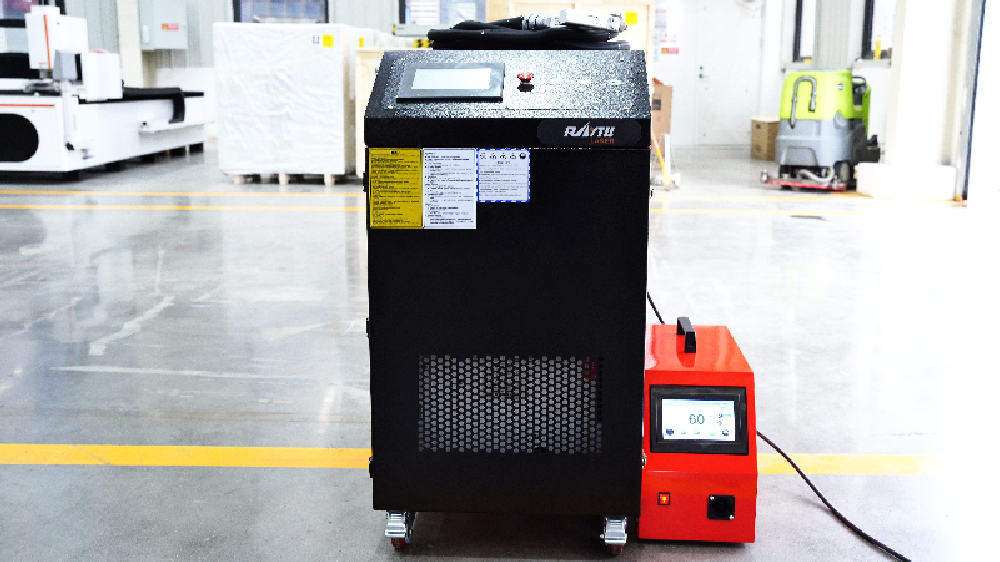
Laser Parameters and Their Impact on Welding Quality
Precision control of laser parameters determines weld integrity across manufacturing sectors. Four critical factors govern welding outcomes in laser welder systems: power regulation, motion speed, beam geometry, and focal positioning.
Laser power and its direct correlation with penetration depth
Higher power settings enable deeper weld penetration, with industrial applications showing a direct relationship between kilowatt output and millimeter penetration depth. However, exceeding material-specific thresholds risks distortion and porosity—automotive laser welders typically operate between 2–6 kW for steel components to balance penetration and heat input.
Welding speed and its impact on quality and consistency
Optimal travel speeds maintain weld pool stability while preventing excessive thermal diffusion. The 2024 Laser Welding Efficiency Report reveals that adjusting speeds within ±0.2 m/min reduces spatter formation by 38% in aluminum welding applications through controlled solidification rates.
Spot size and laser beam focus in precision control
Tighter beam focusing (0.2–0.6 mm spot diameters) increases energy density to 10¶ W/cm², enabling keyhole welding modes for aerospace alloys. Recent advancements in beam shaping reduced porosity defects by 62% in battery tab welding through dynamic spot size adjustments during operation.
Focus position and beam quality in achieving optimal weld profiles
Maintaining ±0.25 mm focal positioning accuracy prevents undercutting and crown height variations. Beam Parameter Product (BPP) values below 2 mm·mrad improve weld consistency by 34% in dissimilar metal joints, as demonstrated in the Beam Quality Optimization Study.
Case study: Optimizing laser welding parameters for automotive components
A leading automotive manufacturer achieved 22% faster cycle times through parameter optimization:
- 4 kW laser power for 3 mm penetration depth
- 1.8 m/min travel speed with ±0.5% velocity control
- 0.3 mm spot diameter for narrow weld seams
- +0.1 mm defocus position to widen fusion zones
This configuration reduced post-weld machining by 40 hours per 1,000 units while meeting ISO 13919-1 quality standards for automotive chassis components.
Material Compatibility and Preparation for Reliable Laser Welding
Material compatibility in laser welding across alloys and thicknesses
The effectiveness of laser welders changes quite a bit based on what materials they're working with. Stainless steel and aluminum alloys tend to give the best results when welding parts within certain thickness limits. According to the latest data from the 2023 Material Compatibility Report, modern laser systems can penetrate stainless steel sheets as thick as 5 mm and aluminum around 3 mm without issues. When it comes to welding different metals together, say copper and nickel for example, things get trickier. Getting these combinations right needs really careful management of heat distribution across the joint area. Otherwise there's a good chance of ending up with unwanted stress points where the two metals meet after cooling down.
Surface preparation for laser welding to minimize defects
Effective surface treatment reduces weld defects by up to 60% in aluminum applications according to industry research. Critical preparation steps include:
- Mechanical abrasion to remove oxide layers
- Chemical cleaning for oil/grease elimination
- Edge profiling for optimal beam absorption
Industry challenge: Welding high-reflectivity materials like aluminum and copper
New pulsed laser configurations overcome reflectivity challenges in copper welding, achieving 92% energy absorption compared to traditional continuous-wave systems' 65% baseline. Adaptive beam shaping techniques compensate for aluminum's thermal conductivity variations, particularly in aerospace-grade 7000-series alloys where porosity rates decrease from 12% to 3% when using optimized parameters.
Joint Design, Fixturing, and Gap Control in Laser Welder Systems
Fixturing and Gap Control for Consistent Weld Integrity
Good fixturing keeps parts from moving around when using laser welders, something that matters a lot in manufacturing quality. Research from the Journal of Manufacturing Processes back in 2023 found that if parts aren't properly clamped down, there's about a 23% jump in those pesky porosity issues. For really important stuff like battery welding, top manufacturers stick to gaps smaller than 0.1 mm. They get this tight control through hydraulic or pneumatic systems that hold everything just right. The newer adaptive fixtures on the market actually adjust themselves while welding happens, which makes joints much more consistent. These smart fixtures beat out regular ones by about 18%, according to tests run on aerospace components where even tiny inconsistencies can be a big problem.
Joint Design and Fit-Up Standards in High-Precision Manufacturing
Optimized joint configurations directly influence weld penetration and mechanical strength:
| Joint Type | Ideal Material Thickness | Weld Width Tolerance |
|---|---|---|
| Square Butt | 0.5–3.0 mm | ±0.05 mm |
| T-Joint | 1.2–4.0 mm | ±0.08 mm |
| Overlap | 0.3–2.5 mm | ±0.03 mm |
Edge preparation standards require machining angles between 30°–45° for stainless steel and titanium alloys to facilitate proper energy absorption. The automotive industry has reduced fit-up errors by 41% since 2021 through automated optical alignment systems integrated with laser welders.
Shielding Gas and Thermal Management for High-Quality Welds
Controlling Heat-Affected Zone (HAZ) Through Cooling Rate Management
Precise thermal management reduces HAZ width by 30–40% in laser welding applications (Welding Research Institute 2023). Controlled cooling rates between 100–300°C/s prevent microcracking in carbon steels while maintaining hardness above 35 HRC. Advanced systems combine real-time temperature monitoring with adaptive cooling jets to maintain optimal thermal gradients during solidification.
Metallurgical Bonding and Microstructure Control via Thermal Regulation
Maintaining interpass temperatures within 150–250°C produces fine-grained microstructures with 15% higher tensile strength compared to uncontrolled processes. This thermal regulation is particularly critical when joining dissimilar materials like carbon steel to stainless alloys, where differential expansion coefficients can cause stress concentrations exceeding 400 MPa.
Use of Shielding Gases to Prevent Oxidation and Ensure Weld Purity
Recent studies show argon-helium gas mixtures reduce porosity by 62% compared to pure argon in aluminum laser welding applications (2024 laser welding research). The table below compares shielding gas performance:
| Gas Blend | Oxidation Reduction | Optimal Flow Rate | Best For |
|---|---|---|---|
| 75% Ar/25% He | 89% | 15–20 L/min | Stainless Steel |
| 90% He/10% N₂ | 78% | 18–22 L/min | Copper Alloys |
| 100% CO₂ | 64% | 12–15 L/min | Carbon Steel |
Proper gas nozzle alignment within 3–5 mm of the weld pool eliminates atmospheric contamination while minimizing turbulence-induced defects. Modern laser welders integrate flow-sensing technologies that automatically adjust shielding gas parameters when welding thickness variations exceed 0.5 mm.
Automation, Equipment Stability, and Process Optimization in Laser Welders
Role of Equipment Stability in Maintaining Consistent Laser Output
Stable laser welder systems minimize output fluctuations caused by thermal drift or mechanical vibration, directly influencing weld penetration consistency. A 2025 industry benchmark study found that maintaining beam quality consistency within 2% variation reduces porosity defects by 37% in aluminum welds. Key stability factors include:
- Vibration-damped optical path assemblies
- Active cooling systems maintaining ±0.5°C temperature control
- Real-time power monitoring with <1% measurement error
Automation and Sensor Integration for Real-Time Parameter Adjustment
Modern laser welders integrate adaptive optics with AI-driven process control to dynamically adjust parameters during welding operations. High-speed pyrometers (sampling at 10 kHz) and CMOS cameras enable closed-loop control of:
- Beam focus position (±5 μ accuracy)
- Shielding gas flow rates (0.1 L/min resolution)
- Travel speed compensation for joint misalignment
Optimizing Laser Welding Parameters Using DOE and AI Modeling
According to a recent look at manufacturing practices in 2024, using AI to optimize parameters cut down setup time by nearly two thirds for those tricky battery tab welding jobs. The machine learning systems were fed around 12 thousand different weld examples and managed to hit about 92 percent accuracy when figuring out what works best for joining different materials together. When companies mix traditional Taguchi methods with modern neural networks in their experimental design work, they get results way quicker too. These hybrid approaches reach good solutions about 40 percent faster than just messing around manually trying different settings until something sticks.
Implementing Feedback Loops for Continuous Quality Improvement
Embedded data logging systems capture 30+ process variables per weld seam, enabling statistical process control (SPC) with <0.5 Cpk deviation detection. Leading automotive suppliers report a 62% reduction in post-weld rework after implementing real-time spectral analysis feedback systems that automatically flag deviations in plasma emission signatures.
Frequently Asked Questions
What are the key factors affecting laser welding quality?
Key factors include laser power, welding speed, spot size, beam focus, material compatibility, surface preparation, and equipment stability.
How does material compatibility influence laser welding?
Material compatibility affects heat distribution and weld penetration, especially when joining different metals. Proper management prevents unwanted stress points and improves joint integrity.
What role does automation play in laser welding?
Automation enhances precision by adjusting welding parameters in real-time using sensors and AI. It improves efficiency, reduces setup time, and ensures consistent welding quality.
Table of Contents
-
Laser Parameters and Their Impact on Welding Quality
- Laser power and its direct correlation with penetration depth
- Welding speed and its impact on quality and consistency
- Spot size and laser beam focus in precision control
- Focus position and beam quality in achieving optimal weld profiles
- Case study: Optimizing laser welding parameters for automotive components
- Material Compatibility and Preparation for Reliable Laser Welding
- Joint Design, Fixturing, and Gap Control in Laser Welder Systems
- Fixturing and Gap Control for Consistent Weld Integrity
- Joint Design and Fit-Up Standards in High-Precision Manufacturing
- Shielding Gas and Thermal Management for High-Quality Welds
- Automation, Equipment Stability, and Process Optimization in Laser Welders
- Frequently Asked Questions