
 EN
EN
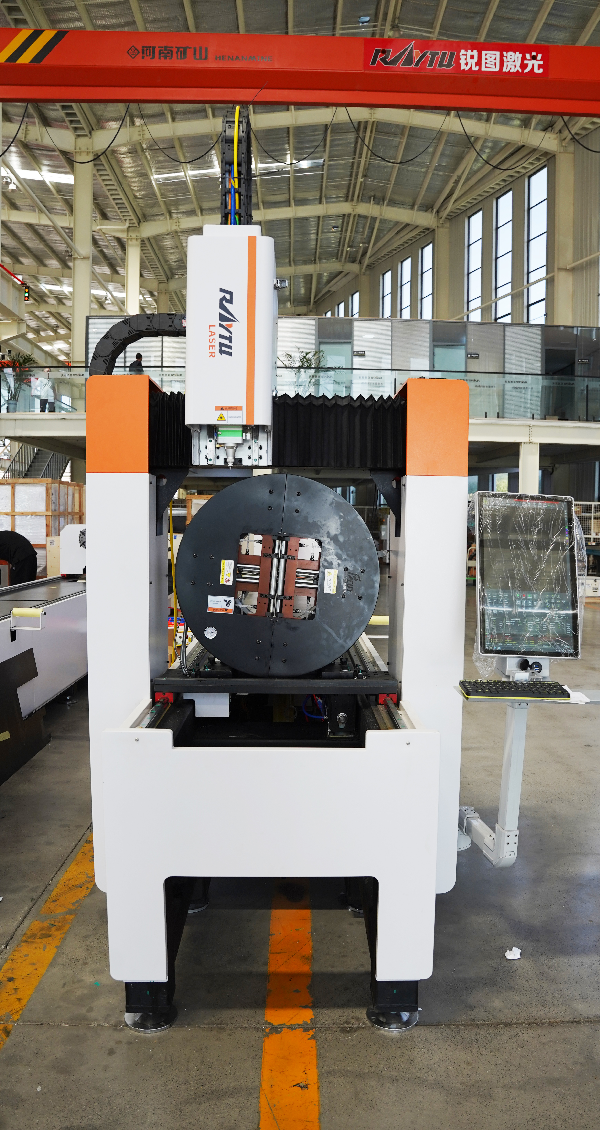
Precision and Accuracy in Complex Tube Geometries
How fiber laser systems achieve sub-millimeter precision on intricate tube shapes
Modern tube laser cutting machines achieve remarkable ±0.1mm accuracy through three key innovations:
- Adaptive beam compensation that adjusts for material thickness variations
- Real-time monitoring systems correcting for thermal distortion
- High-resolution capacitive sensors tracking tube positioning
These technologies enable consistent, high-precision cuts on complex organic shapes such as automotive exhaust headers—geometries where traditional methods often fail to maintain uniformity.
Tolerance control in multi-axis tube laser cutting machines
Five-axis systems ensure tight tolerance control via dynamic adjustments:
- Automatic focal length compensation (+/- 0.05mm)
- Chuck pressure optimization based on wall thickness
- Predictive algorithms preventing ovality deformation
This coordination allows machining of 0.8mm-thick stainless steel tubes with less than 0.2mm deviation over 10-meter lengths, ensuring structural integrity and fitment precision.
Case study: Dimensional accuracy in aerospace-grade tubing components
In a recent aerospace project:
| Parameter | Requirement | Laser Cutting Result |
|---|---|---|
| Ovality tolerance | ±0.15mm | 0.12mm average |
| End squareness | ±0.1° | 0.08° maximum |
| Hole positioning | ±0.05mm | ±0.03mm achieved |
The project delivered 2,400 hydraulic system tubes with zero rework, reducing assembly time by 37% compared to conventional fabrication methods.
Debunking the myth: Laser precision on thin-walled and irregular tubes
Contrary to outdated assumptions, modern fiber lasers reliably process delicate and non-standard profiles:
- 0.5mm-thin medical guidewires with 97% precision retention
- Non-concentric tubes experiencing <1% energy reflection loss
- Flared ends maintaining ±0.2mm profile consistency
These capabilities confirm that non-contact laser cutting outperforms mechanical methods in both accuracy and repeatability for sensitive applications.
360° Cutting Capability and Automated Tube Rotation
The latest generation of tube laser cutters gives operators complete access around the entire circumference thanks to synchronized spinning and flexible laser movement across multiple axes. This setup makes it possible to cut all sorts of tricky shapes from spiral patterns to irregular grooves and complicated curves without breaking a sweat. The computer controlled chucks adjust how tight they grip the material and control spinning speeds on the fly, which keeps everything accurate down to fractions of a millimeter even at top speeds. Automated loading and unloading of materials means workers don't have to touch anything during production, something that's particularly important in industries where contamination is a big concern, such as making surgical instruments. When looking at old school rotary indexing methods versus these new systems, the time savings are pretty dramatic, especially for tubes that come in different sizes or have special profile requirements that used to take forever to handle.
CNC and CAD/CAM Integration for Repeatable, Complex Cuts
Achieving Sub-Millimeter Repeatability With Advanced CNC Control
CNC systems with closed loops can achieve around 0.03mm accuracy because they keep tweaking cutting settings as they work. The multi-axis machines handle problems like oval tubes and inconsistent walls through constant adjustments based on feedback signals, which keeps everything precise even during long production runs. A recent test in aerospace manufacturing back in 2023 showed these systems hitting 99.8% consistency when making 10,000 fuel lines. That kind of reliability is absolutely critical for parts that need to withstand pressure safely in aircraft systems.
Seamless Integration With CAD/CAM Software for Rapid Prototyping
When 3D CAD models get converted directly into machine instructions, it cuts down programming time significantly compared to typing out G-code manually. Some folks in the industry report around three quarters less time spent on programming tasks when using this method. A recent look at how CAD and CAM systems work together found something interesting too. When machines automatically optimize their cutting paths, they actually reduce those annoying angular distortions in stainless steel tubes by nearly two thirds. The secret seems to be better heat control during the process. For companies making medical implants, these digital workflows mean prototypes can be ready within a single day. And the finished products stay remarkably close to what was originally designed, typically no more than tenth of a millimeter off spec.
AI-Assisted Path Optimization: The Future of Intelligent Tube Laser Programming
Machine learning algorithms analyze historical cutting data to anticipate material behavior such as spring-back and thermal expansion, automatically fine-tuning focus position and feed rate. Early adopters report 40% faster setup times for custom architectural profiles using AI-powered nesting solutions that maximize material use while avoiding collisions.
Versatility Across Non-Standard and Irregular Tube Profiles
Cutting Square, Rectangular, Oval, and Custom-Shaped Tubes With Adaptive Fixturing
Adaptive fixturing systems can achieve around 0.1mm accuracy for irregular shapes because they adjust both the clamping pressure and angles as they detect the actual form in real time. These systems handle all sorts of different items without issues - think oval shaped tubes used in medicine or those odd looking roll cages from cars. Some research done last year looked at 27 factories using these systems and reported about an 18 percent drop in wasted materials when working with custom made tubing for buildings. That kind of efficiency makes a big difference in production costs over time.
Handling T-Sections, L-Sections, and Other Non-Standard Profiles Using Modular Tooling
Modular chucks and programmable nest systems support single-machine processing of complex structural profiles including:
- T-shaped hydraulic manifolds used in agricultural equipment
- L-section aluminum framing for modular construction
- Hexagonal heat exchanger tubes with internal baffles
This flexibility eliminates the need for dedicated tooling per profile while maintaining 0.25mm repeatability across mixed batches.
Flexibility in Mixed-Profile Production Runs for High-Mix, Low-Volume Manufacturing
Manufacturers report 40% faster job changeovers when transitioning between circular HVAC ducts and square robotic frame components. This efficiency stems from integrated CAD/CAM platforms that store fixturing settings and cutting paths for over 500 unique profiles, enabling just-in-time production of specialized tubing without manual reprogramming.
Industry Applications and Advantages Over Traditional Methods
Key Applications in Automotive, Aerospace, and Medical Device Manufacturing
Laser cutting tubes has become the go-to technique across many sectors where precision down to the micrometer matters. Car makers have been using this technology to create exhaust manifolds and roll cages with almost perfect measurements, hitting around 99.9% accuracy in their dimensions. The aerospace sector takes things even further with those fancy 5 axis laser systems when working with tough materials like titanium for fuel lines and hydraulic parts. Meanwhile doctors and surgeons benefit from fiber lasers too, as medical companies craft intricate surgical tools and tiny components that need absolute precision. Looking at recent reports from the industry, about eight out of ten aerospace tube components these days get cut with lasers instead of traditional stamping methods.
Medical Breakthroughs: Laser-Cut Stents and Micro-Tube Catheter Shafts
Fiber lasers cut 0.2mm stainless steel tubes for coronary stents without inducing thermal distortion. Automated rotation enables burr-free micro-perforations in polymer catheter shafts, achieving features below 50μm. This level of precision reduces post-processing steps by 60% compared to traditional EDM, as demonstrated in a 2023 Johns Hopkins University trial.
Superiority Over Sawing, Plasma, and Waterjet in Complex Shape Fabrication
Laser cutting avoids the tool wear inherent in mechanical sawing, sustaining ±0.05mm tolerances over 10,000+ cuts. Unlike plasma and waterjet processes, fiber lasers produce heat-affected zones under 0.1mm deep—critical for stress-sensitive aluminum aircraft tubing. A 2024 comparative study showed lasers reduced warpage by 78% versus waterjet cutting in thin-walled copper tubes.
Reduced Secondary Operations and Higher Efficiency With Clean Laser Cuts
Automated nesting software improves material utilization by 22% compared to manual plasma layouts. The clean edges produced by 4kW fiber lasers eliminate deburring in 91% of automotive brake line applications, saving 40 seconds per part. Manufacturing efficiency reports highlight 53% faster changeovers between tube profiles compared to mechanical cutting systems.
Frequently Asked Questions
What is the accuracy of modern tube laser cutting machines?
Modern tube laser cutting machines achieve remarkable ±0.1mm accuracy through adaptive beam compensation, real-time monitoring systems, and high-resolution capacitive sensors.
How do five-axis systems ensure tight tolerance control?
Five-axis systems use dynamic adjustments such as automatic focal length compensation, chuck pressure optimization, and predictive algorithms to prevent ovality deformation, helping maintain tight tolerance control.
Are fiber lasers capable of processing thin-walled and irregular tubes?
Yes, modern fiber lasers can reliably process delicate and non-standard profiles, including 0.5mm-thin medical guidewires and non-concentric tubes, outperforming mechanical methods in accuracy and repeatability.
How do CNC and CAD/CAM systems contribute to cutting accuracy?
CNC and CAD/CAM systems allow for sub-millimeter repeatability by continuously adjusting settings and optimizing cutting paths, reducing programming time and enhancing precision.
What are some key applications of laser tube cutting technology?
Laser tube cutting is widely used in automotive, aerospace, and medical device manufacturing, delivering precision and efficiency for applications such as exhaust manifolds, titanium fuel lines, and intricate surgical tools.
Table of Contents
- Precision and Accuracy in Complex Tube Geometries
- 360° Cutting Capability and Automated Tube Rotation
- CNC and CAD/CAM Integration for Repeatable, Complex Cuts
- Versatility Across Non-Standard and Irregular Tube Profiles
- Industry Applications and Advantages Over Traditional Methods
- Key Applications in Automotive, Aerospace, and Medical Device Manufacturing
-
Frequently Asked Questions
- What is the accuracy of modern tube laser cutting machines?
- How do five-axis systems ensure tight tolerance control?
- Are fiber lasers capable of processing thin-walled and irregular tubes?
- How do CNC and CAD/CAM systems contribute to cutting accuracy?
- What are some key applications of laser tube cutting technology?