
 EN
EN
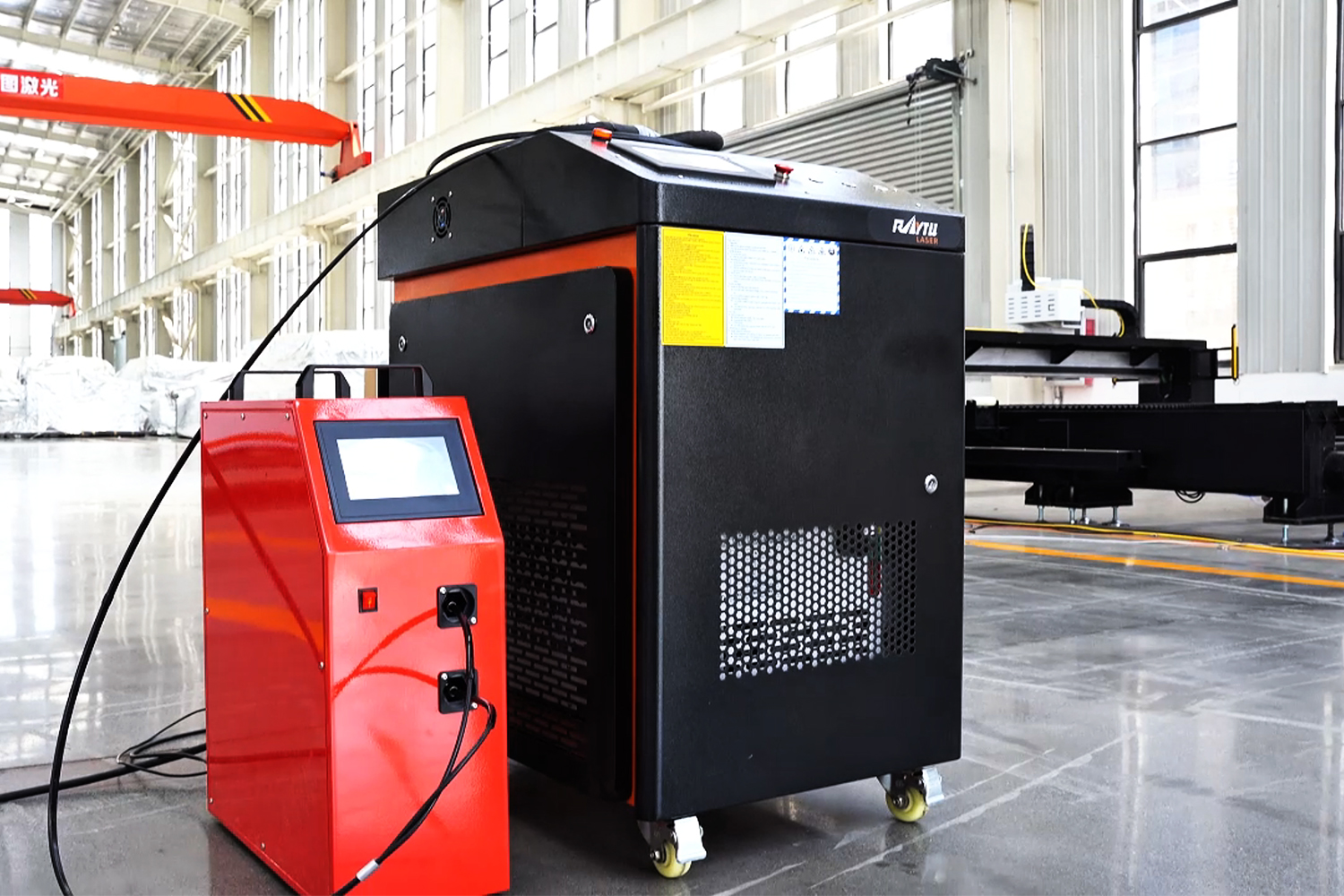
Minimal Heat-Affected Zone and Superior Welding Precision
How Laser Welding Precision Reduces the Heat-Affected Zone (HAZ)
Laser welding equipment can get down to really fine details because it packs all that energy into a super thin beam, sometimes just 0.1 millimeters wide. The way this works means less heat spreads around during the process, which cuts down on what's called the Heat Affected Zone by about 85 percent when compared with traditional arc welding methods according to some research from Material Processing Journal back in 2023. Since lasers melt only exactly where they need to go, they leave most of the surrounding material untouched at a microscopic level. That makes these machines especially good for jobs where temperature control matters a lot, like making those tiny parts used in medical devices or implants where even small changes could affect how things work inside the body.
Focused Energy Input and Its Role in Minimizing Thermal Distortion
With power densities ranging from 5–25 kW/mm², laser systems vaporize metal almost instantly, minimizing lateral heat spread. This rapid energy transfer limits thermal distortion to ∼0.1mm in most cases. Automated beam oscillation further enhances heat distribution, enabling distortion-free welds even in delicate 0.5mm-thick aerospace aluminum sheets.
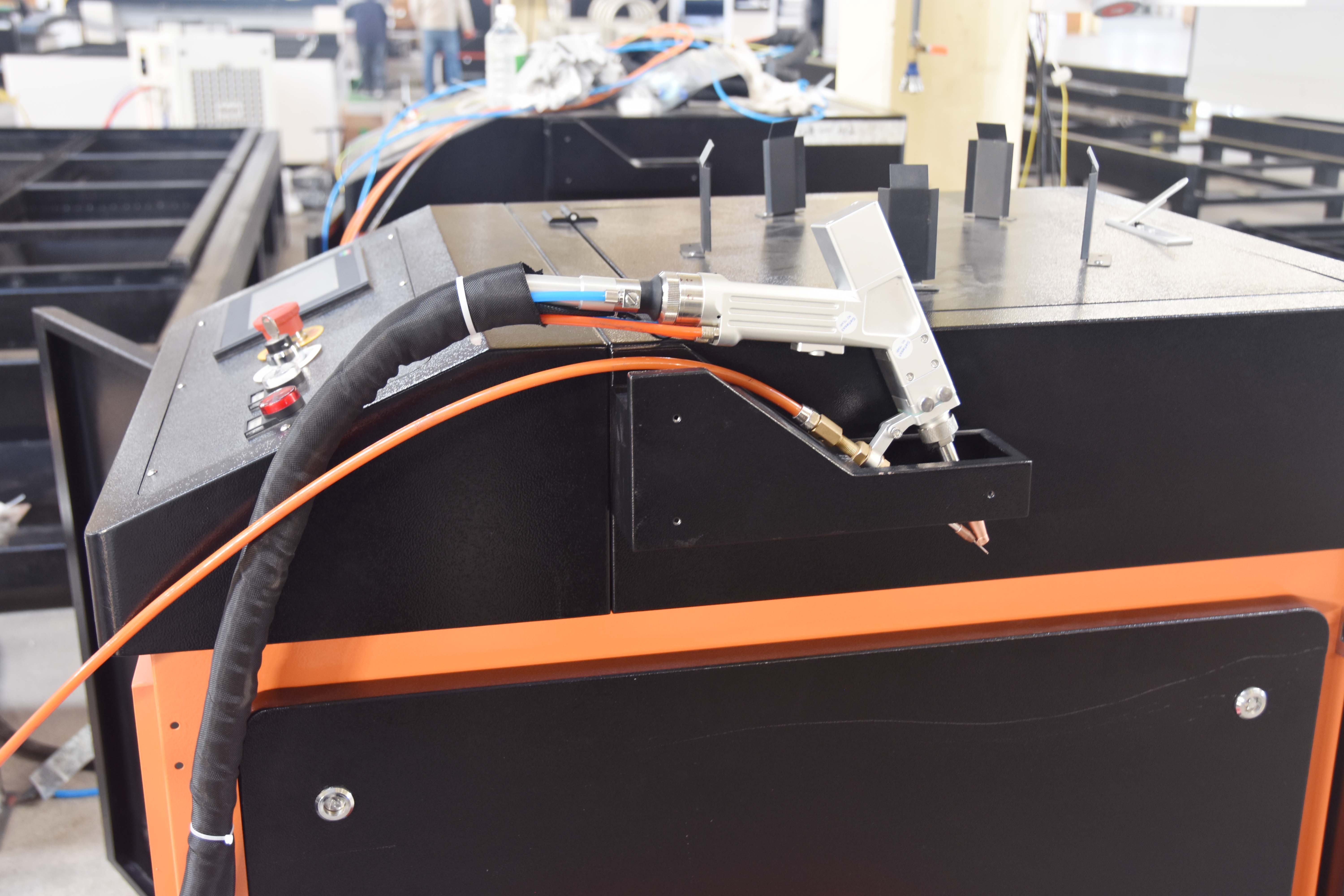
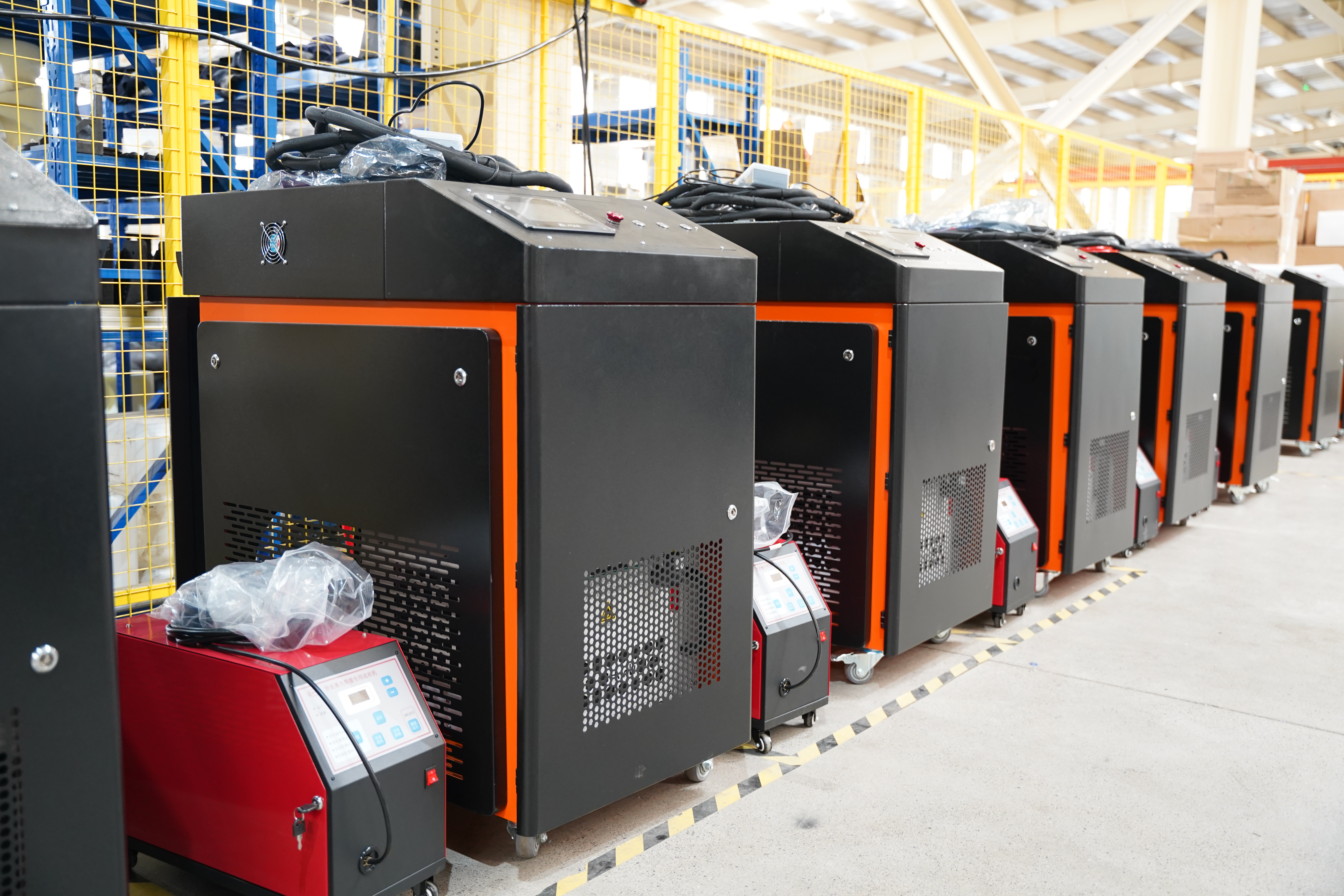
Laser Welding vs. Traditional Methods: A Comparison of HAZ and Accuracy
| Parameter | Laser Welding | Traditional Welding (TIG/MIG) |
|---|---|---|
| Typical HAZ Width | 0.2–0.8mm | 3–10mm |
| Weld Precision | ±50μm | ±500μm |
| Max Welding Speed | 12 m/min | 1.5 m/min |
| Distortion in 1mm Steel | <0.05mm | 0.3–1.2mm |
In automotive battery tray production, laser welding reduces post-weld rework by 92% due to its superior dimensional control and consistency.
Case Study: Preventing Micro-Cracking in Aerospace Alloys With Low HAZ
When welding nickel-based superalloys for jet engine components, laser systems produce a narrow 0.3mm HAZ, minimizing stress concentration at grain boundaries. X-ray diffraction analysis showed 34% lower residual stress than plasma arc welding (Aerospace Materials Report 2023), contributing to a 7x improvement in fatigue life during simulated flight cycles.
Advanced Beam Control and Focus Accuracy in Laser Welding Machines
Modern laser welding machines achieve micron-level precision through advanced beam control systems. Three critical technologies enable this capability:
Fiber Laser Technology and Its Impact on Beam Stability and Precision
Fiber lasers generate near-perfect Gaussian beam profiles with M² values below 1.1, indicating near-diffraction-limited performance. This stability sustains power densities exceeding 10¹⁰ W/cm², enabling clean keyhole welding in materials as thin as 0.05 mm, according to recent material processing studies.
Galvanometric Scanners for Dynamic, Multi-Axis Laser Beam Positioning
High-speed galvanometer mirrors steer beams at speeds up to 8 m/sec with ±5 µm repeatability, making them ideal for complex geometries in aerospace and medical device manufacturing. Integrated 7-axis motion control allows simultaneous beam adjustments and workpiece manipulation for maximum flexibility.
Beam Quality (M² Factor) and Its Influence on Weld Consistency
The M² factor directly affects focal spot size and depth-of-field. Systems with M² ≤ 1.3 maintain consistent 0.1–0.3 mm weld seams over 200 mm working distances—critical for high-tolerance applications like battery tab welding, where thickness variation must stay below 3%.
Balancing High Laser Power With Maintained Focus Accuracy
Focus-shift compensation modules allow 6 kW lasers to maintain ±0.02 mm focal accuracy during continuous operation. This precision prevents geometric deviations in EV battery tray welding, where a 0.1 mm misalignment can increase electrical resistance by 15%.
High-Precision Applications in Medical, Aerospace, and Automotive Industries
Micron-Level Welding in Medical Devices Using Laser Welding Machines
Laser welding enables tolerances under 10µm—about 1/8th the width of a human hair—making it ideal for surgical tools and implantable devices (Journal of Medical Engineering 2024). The process produces hermetic seals in pacemakers and smooth, biocompatible joints in titanium implants, meeting FDA standards without requiring post-processing.
Aerospace Component Welding Under Extreme Performance and Safety Standards
In aerospace, laser welding joins nickel superalloys used in turbine blades and fuel nozzles with heat inputs under 50 J/cm², preserving material integrity at operational temperatures up to 1,200°C. According to a 2023 ESA study, laser-welded satellite components are 17% lighter and 23% more structurally stable than those welded with TIG.
Automotive Battery Manufacturing With Zero-Defect Laser Welding
Automakers use laser welding to achieve defect rates below 0.2 parts per million in EV battery packs. The technology creates precise 150µm-wide copper-to-aluminum interconnect welds capable of handling 400A continuous current without risk of thermal runaway. This level of reliability avoids an estimated $740k in recall costs per 10,000 units (Ponemon 2023).
Real-Time Monitoring and Intelligent Process Control
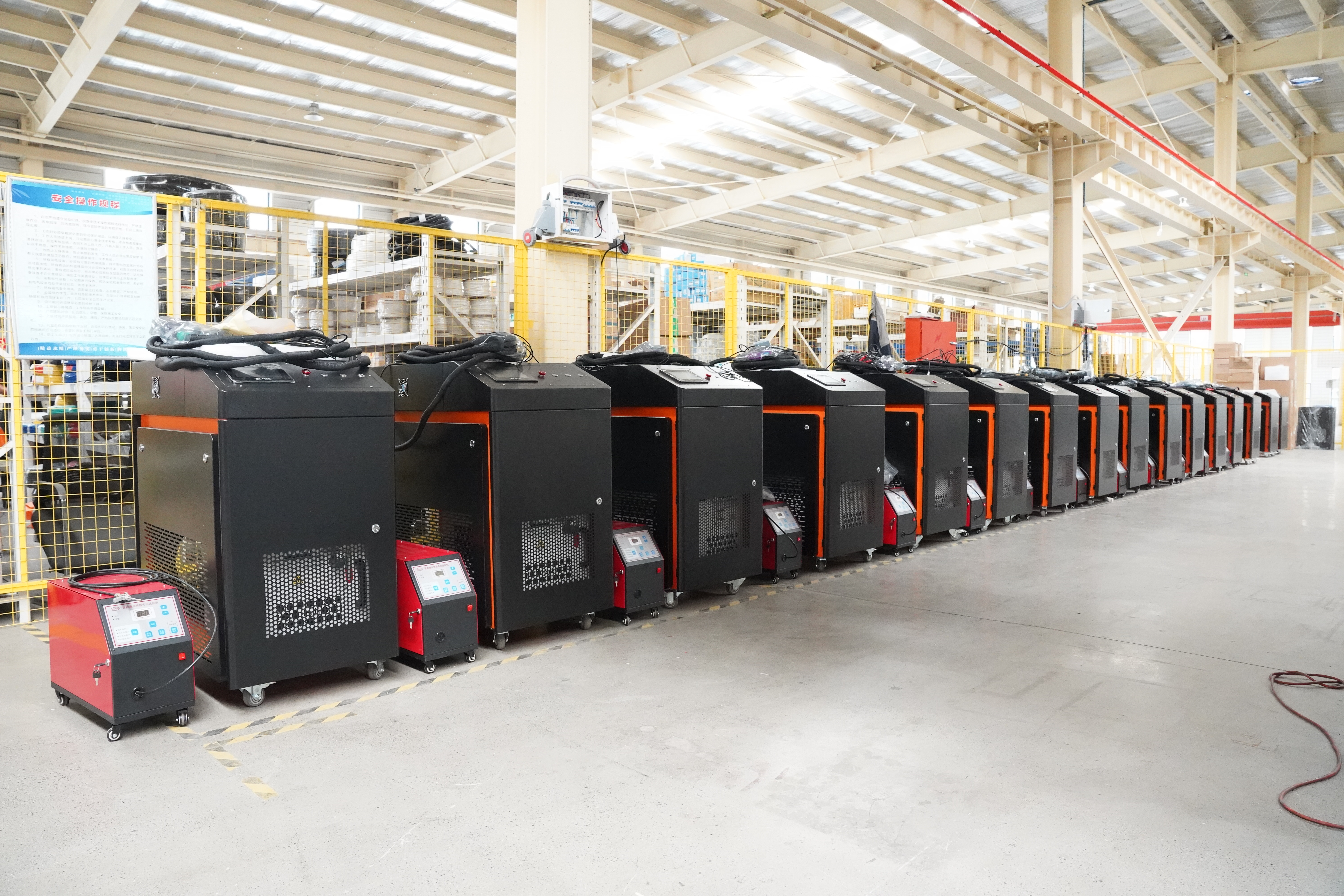
Sensor Integration for Consistent Quality in Laser Welding Machines
Sensor arrays integrated into welding equipment keep tabs on weld pool temperatures with about plus or minus 5 degrees Celsius accuracy, while also monitoring beam alignment down to 0.01 millimeters. According to research from the Fraunhofer Institute back in 2023, this kind of monitoring cuts down defects by around 60% when working on precision jobs. When something goes off track, these systems will send out automatic warnings in just half a second. The multi spectral sensors don't stop there either they watch both plasma emissions and how light reflects off surfaces at the same time. This dual tracking allows for real time adjustments that help maintain good weld quality even when switching between different batches of materials with varying properties.
Real-Time Keyhole Monitoring Using OCT and Imaging Technologies
Optical coherence tomography, or OCT for short, gives us imaging at around 10 microns resolution when looking at weld keyholes. It can spot those pesky voids or inclusions in just under half a millisecond. Then there are these high speed CMOS cameras that take pictures of the melt pool action at an incredible 50 thousand frames every second. This lets operators tweak the laser focus on the fly while it's pulsating away. When manufacturers combine both OCT and CMOS systems together, they see a massive improvement in weld quality consistency - somewhere around three quarters better than what they get with just one sensor setup. This matters a lot in medical device production where even small inconsistencies can lead to big problems down the line.
Machine Learning Algorithms for Adaptive Laser Parameter Control
When neural networks get trained on massive welding databases containing terabytes of data, they can actually predict the best settings for those tricky material combinations pretty accurately around 98.7% of the time. Take an automotive battery factory as an example where these smart systems tweak power levels between 200 to 4000 watts and adjust pulse durations from just 0.1 milliseconds all the way up to 20 milliseconds at a blistering rate of 800 adjustments every single second. This results in completely pore-free welds when working with nickel coated steel. What makes these systems really stand out is their ability to automatically correct issues like dirty surfaces or misaligned joints during the process itself. As a result, factories have seen about a 40% reduction in the need for those tedious post-weld inspections that used to take so much time and resources.
Automation vs. Human Oversight in Intelligent Welding Systems
About 93 percent of those everyday parameter tweaks are handled by AI these days, though human engineers still play a crucial role when it comes to fine tuning algorithms for new materials such as gamma-TiAl used in jet engine components. Looking at a recent 2024 case study shows something interesting happened when they mixed machine learning approaches with actual metallurgy expertise from experts in the field. The results? Aerospace parts rejection dropped dramatically from around 12% down to just 0.8%. What do operators do now? They spend their time spotting those really subtle defect patterns that current AI systems miss entirely. This kind of hands-on work helps improve overall system performance because people keep feeding back what works and what doesn't based on actual experience rather than just data points.
FAQ
What is a Heat-Affected Zone (HAZ) in welding?
The Heat-Affected Zone (HAZ) refers to the area of base material, either metal or thermoplastic, that has experienced physical and mechanical property changes due to welding. In laser welding, the HAZ is significantly minimized, preserving the integrity of the surrounding materials.
How does laser welding minimize thermal distortion?
Laser welding utilizes focused energy input with power densities ranging from 5–25 kW/mm². This precision vaporizes metal rapidly, minimizing lateral heat spread and effectively reducing thermal distortion.
How does real-time monitoring improve laser welding quality?
Real-time monitoring incorporates sensors to track vital parameters, making automated adjustments possible. This continuous feedback helps maintain high weld quality and consistency across different material batches.
What role does machine learning play in modern laser welding?
Machine learning enhances laser welding by adapting to new material combinations. Neural networks analyze large datasets to optimize settings, correct process deviations, and ultimately improve weld quality while reducing manual inspection needs.